The Simple Truth About How Often You Should Change Your Air Filter
How often should you change your air filter is one of the most common HVAC questions homeowners ask — and the honest answer isn't a single number. It depends on your filter type, your home, your pets, and even the time of year.
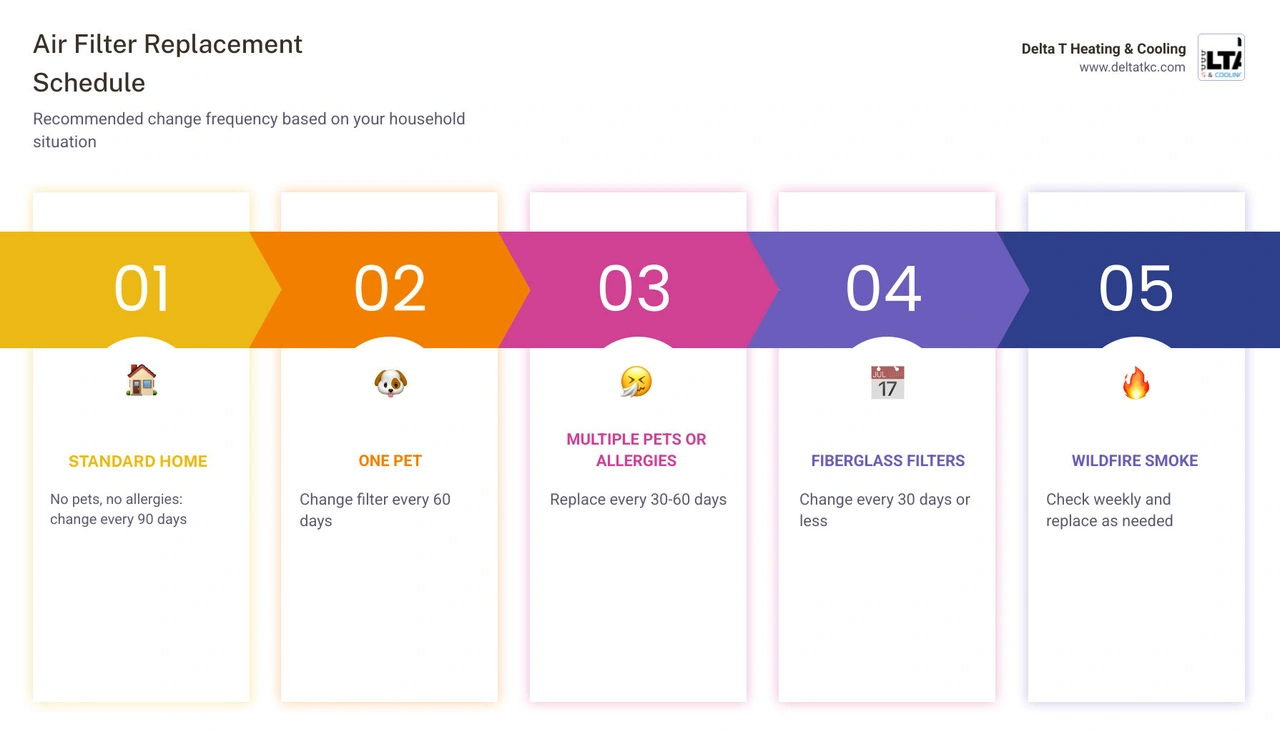
Here's a quick-reference guide to get you started:
| Household Situation | Recommended Change Frequency |
|---|
| Standard home, no pets, no allergies | Every 90 days |
| One pet in the home | Every 60 days |
| Multiple pets or allergy sufferers | Every 30-60 days |
| Fiberglass filters (any home) | Every 30 days or less |
| Vacation home or low occupancy | Every 6-12 months |
| Wildfire smoke or poor outdoor air quality | Check weekly, replace as needed |
Most families land somewhere in the 60-to-90-day range. But if you have pets, allergies, or a busy household, that window shrinks fast. Neglecting your filter doesn't just hurt your air quality — a dirty filter can drive up energy use by 5-15% and put serious strain on your HVAC system over time.
In the sections below, we'll walk through every factor that affects your filter schedule, how to spot a clogged filter before it causes damage, and how to swap it out the right way.
How Often Should You Change Your Air Filter?
Determining the perfect replacement interval for your home's HVAC filter is more of an art than a rigid science. While manufacturers provide baseline recommendations on their packaging, these numbers assume a "typical" household with standard occupancy, moderate weather, and no indoor pets.
In reality, your system's filter acts as the lungs of your home, and the rate at which it accumulates debris depends heavily on your daily life. Sticking to a generic calendar without evaluating your home's unique variables can lead to two main issues: either you waste money replacing perfectly clean filters too soon, or you leave a clogged filter in place, forcing your system to work harder.
To help you find your ideal baseline, let's explore how different filter types and their corresponding performance metrics dictate how long they can effectively clean your air.
Understanding MERV Ratings and Filter Longevity
The primary standard for measuring an air filter's efficiency is the MERV (Minimum Efficiency Reporting Value) rating system. Ranging from 1 to 20, the MERV scale tells you exactly how effectively a filter can trap airborne particles of various sizes.
- MERV 1 to 4: These are basic filters, often made of fiberglass. They primarily protect your HVAC equipment from large dust bunnies and debris but do very little to improve indoor air quality. Because they have limited surface area and capture only large particles, they clog quickly and must be replaced every 30 days or less.
- MERV 5 to 8: This is the standard residential sweet spot for many homes. These pleated filters trap mold spores, pollen, pet dander, and dust mites. They offer a great balance between filtration efficiency and airflow, typically lasting up to 90 days in a pet-free home.
- MERV 9 to 12: These high-efficiency pleated filters are excellent for capturing finer particulates, including lead dust and automotive emissions. They are highly recommended for households with moderate allergies. However, because they trap smaller particles, they can restrict airflow more quickly if neglected, meaning they should be checked every 30 to 60 days.
- MERV 13 to 16: These filters are capable of trapping bacteria, smoke, and microscopic droplets. While they provide superior air purification, they require a robust HVAC system to handle the increased resistance to airflow. If your system is rated for them, these thicker media filters can sometimes last 6 to 12 months, though standard 1-inch variations at this rating will clog much faster.
When choosing a filter, it is critical to consult your system's manual or speak with a professional. Using a filter with a MERV rating that is too high for your system can restrict airflow to dangerous levels, mimicking the effects of a clogged filter and potentially causing your system to malfunction.
For a deeper dive into adjusting your replacement schedule based on your specific system setup, you can read our comprehensive guide on how often should you change your HVAC air filter or explore expert insights on How Often Should You Change Your HVAC Air Filter? to see how different systems handle various filter materials.
Fiberglass vs. Pleated Air Filters
The material and construction of your air filter play a massive role in both its filtration capability and its overall lifespan. The two most common options found in homes across Johnson County are flat fiberglass filters and pleated media filters.
Disposable Fiberglass Filters
Commonly referred to as "economy" or "furnace" filters, these are characterized by a thin, see-through layer of spun fiberglass reinforced by a cardboard grate.
- Filtration Performance: Extremely low. They are designed almost exclusively to prevent large debris, like hair and giant dust clumps, from entering your furnace or air handler. They do not capture microscopic allergens, pollen, or fine pet dander.
- Lifespan: Very short. Because they lack surface area and are made of loose fibers, they quickly become saturated. You must replace fiberglass filters every 30 days or less. Leaving them in longer can lead to immediate dust bypass, allowing dirt to settle directly onto your sensitive HVAC coils.
These filters are constructed from synthetic fibers or cotton folded into a series of accordion-like pleats.
- Filtration Performance: High to excellent. The pleated design dramatically increases the overall surface area of the filter media. This allows the filter to capture a far wider range of particle sizes—including pollen, mold spores, and dander—without immediately restricting airflow.
- Lifespan: Moderate to long. Thanks to the expanded surface area, a pleated filter can hold significantly more dust and debris than a flat fiberglass filter. Under normal household conditions, a quality pleated filter can easily last up to 90 days before requiring a replacement.
While pleated filters have a higher upfront cost than fiberglass alternatives, their superior protection, longer lifespan, and ability to improve indoor air quality by 20-30% make them the most cost-effective and reliable choice for most homeowners.
How Home Size and Occupancy Affect the Schedule
It is easy to assume that a filter's lifespan is solely determined by the calendar, but the physical environment of your home plays an equally critical role. Two identical families living in two vastly different houses will have entirely different filter replacement needs.
Home Size and Air Volume
The size of your living space directly correlates with the volume of air your HVAC system must circulate.
- Large Homes: A larger home requires a larger HVAC system that moves a massive volume of air to maintain comfortable temperatures. Because more air is constantly passing through the return vents, the filter will encounter a higher volume of airborne dust and debris over a shorter period. Consequently, large homes often require more frequent filter changes to keep up with the sheer volume of air circulation.
- Small Homes and Apartments: In smaller living spaces, the total volume of air is much lower. However, because the space is compact, dust and airborne particles can become highly concentrated. While the filter may not process as much total air volume as a large home, the concentration of particles means it can still clog relatively quickly, especially if the space is highly active.
Occupancy Levels and Lifestyle
The number of people living in your home has a direct impact on how quickly your filter becomes dirty. Every person in the household sheds skin cells, drops hair, tracks in outdoor dirt, and stirs up settled dust simply by walking through rooms.
- High-Occupancy Homes: Homes with large families, active children, or frequent guests will see a rapid accumulation of dust and microscopic fibers. In these busy households, filters should be inspected monthly and will likely need to be replaced every 45 to 60 days.
- Single or Dual Occupancy: Homes with only one or two residents generate far less indoor airborne debris. In these quiet environments, a standard pleated filter can easily last the full recommended 90 days.
- Vacation Homes and Empty Nests: If a property is only occupied part-time, or if you are dealing with a seasonal vacation home, the HVAC system runs infrequently. With minimal air circulation and zero human activity to stir up dust, filters in these properties can often last 6 to 12 months. However, it is still wise to inspect them at least twice a year to ensure mold or moisture hasn't compromised the filter media.
For more detailed strategies on tailoring your replacement schedule to your household size and occupancy, check out How Often Should You Replace Your Home Air Filter? - Aerterra.
Environmental and Lifestyle Factors That Affect Your Filter Calendar
Your indoor environment is heavily influenced by what is happening right outside your windows. From seasonal pollen spikes to regional air quality issues, outdoor contaminants inevitably find their way inside your home. When outdoor air quality drops due to smog, agricultural dust, or seasonal wildfire smoke, your HVAC filter has to work double-time to keep your indoor air breathable.
In the Midwest, we experience dramatic seasonal transitions that bring unique environmental challenges. For instance, agricultural harvesting in the fall and heavy pollen releases in the spring can saturate an air filter much faster than during a mild winter.
Additionally, local weather patterns can trap pollutants close to the ground, increasing the particulate load on your home's system. To understand how these regional factors play into your regular system maintenance, read about how often to change air filter as part of regular AC service in the Midwest.
How Often Should You Change Your Air Filter If You Have Pets?
As much as we love our furry family members, they are one of the single biggest contributors to clogged air filters. Dogs and cats constantly shed hair and microscopic skin cells, known as pet dander.
Furthermore, outdoor pets track in dirt, pollen, and dried mud, which quickly dries up, becomes airborne, and gets sucked directly into your return vents. This combination of hair, dander, and outdoor debris can increase the particle load in your home's air by 40% or more.
- Single Pet Households: If you have one cat or a dog that doesn't shed heavily, your filter will load up faster than a pet-free home. You should plan to inspect your filter monthly and replace it every 60 days.
- Multiple Pet Households: If you have multiple pets, or high-shedding breeds (like Huskies, Golden Retrievers, or long-haired cats), pet hair will quickly blanket the front face of your filter, severely restricting airflow. In these active pet homes, filters must be checked every 30 days and replaced every 30 to 45 days.
To prevent your HVAC system from acting as a giant pet hair collector, make sure to vacuum around your return grilles regularly and brush your pets outdoors. For more tips on managing pet hair in your HVAC system, refer to How Often Should You Change Your Air Filter? A Quick Guide.
How Often Should You Change Your Air Filter If Someone Has Allergies?
For individuals living with asthma, severe allergies, or other respiratory conditions, a clean air filter is not just about protecting HVAC equipment—it is a matter of daily health and comfort. When an air filter becomes dirty, its ability to trap microscopic allergens decreases, allowing pollen, dust mites, and mold spores to recirculate through your living spaces.
- The Allergy Standard: If anyone in your home suffers from seasonal allergies or asthma, you should upgrade to a high-quality pleated filter with a MERV rating of 11 to 13. These filters are designed to capture fine particles that trigger respiratory symptoms.
- The Replacement Window: Because allergy sufferers are highly sensitive to even minor spikes in airborne particulates, you cannot afford to wait until the filter is completely clogged. In these households, we recommend replacing pleated filters every 30 to 45 days, especially during high-pollen seasons.
- Supplemental Filtration: While a high-MERV HVAC filter is incredibly effective, pairing it with standalone air purifiers in high-traffic rooms can provide an extra layer of defense. To learn how standalone air purifier filters compare to your central system, read the How Often to Replace Air Purifier Filter (2026 Guide).
Seasonal HVAC Usage and Thermostat Settings
The changing seasons dictate how often your heating and cooling system actually runs, which directly impacts how much air passes through your filter.
Peak Cooling and Heating Seasons
During the blistering heat of a Kansas summer or the freezing depths of winter, your HVAC system runs almost continuously to keep your home comfortable. Because of this high run-time, a massive volume of air is processed daily. You should inspect your filter every 30 days during these peak seasons, as they will accumulate dust and debris at an accelerated rate.
Mild Spring and Fall Seasons
During the mild shoulder seasons, you may rarely run your heating or air conditioning. Because the system is idle, the filter accumulates very little dust. During these times, you can safely extend your filter's lifespan.
However, a great trick for spring allergy season is to switch your thermostat's fan setting from "AUTO" to "ON." This keeps the system's fan running continuously, filtering your indoor air even when heating or cooling isn't actively needed. Just keep in mind that running the fan continuously will increase filter usage, requiring a quicker swap.
Warning Signs That Your HVAC Air Filter Needs to Be Replaced
You don't have to guess whether your filter is ready for the trash can. Your home and your HVAC system will drop clear hints when airflow is starting to suffer.
1. The Visual Light Test
The most reliable way to check your filter is a simple visual inspection. Take the filter out of its slot and hold it up to a bright light source, such as a lamp or a window. If the light passes through the filter easily, it still has life left. If the filter is dark, gray, and completely blocks the light, it is fully saturated and needs to be replaced immediately.
2. Excessive Dust Around the Home
Have you noticed a thin layer of dust settling on your tables and shelves just a day or two after a deep cleaning? When a filter is clogged, it can no longer trap new dust. Instead, the air bypasses the filter through tiny gaps, or the system simply recirculates the dusty air back into your living spaces.
3. Reduced Airflow and Uneven Temperatures
If the air coming out of your registers feels weak, or if certain rooms in your home are suddenly taking much longer to cool down or warm up, a clogged filter is the prime suspect. Restricted airflow makes it incredibly difficult for your system to distribute conditioned air evenly throughout your home.
4. Musty or Dusty Odors
When your HVAC system kicks on, do you notice a stale, dusty, or slightly musty smell? Over time, the dust, pet dander, and moisture trapped on a dirty filter can begin to smell, creating an unpleasant odor that is blown into every room.
5. Constantly Running System and Spiking Utility Bills
When airflow is restricted, your air conditioner or furnace has to run much longer cycles to reach the temperature set on your thermostat. This constant operation not only wastes energy but can also lead to severe system issues, such as frozen evaporator coils or a burnt-out blower motor.
To understand the mechanics behind this issue, read more about how a dirty filter causes your AC to run constantly in the Midwest.
Step-by-Step Guide: How to Properly Change Your Air Filter
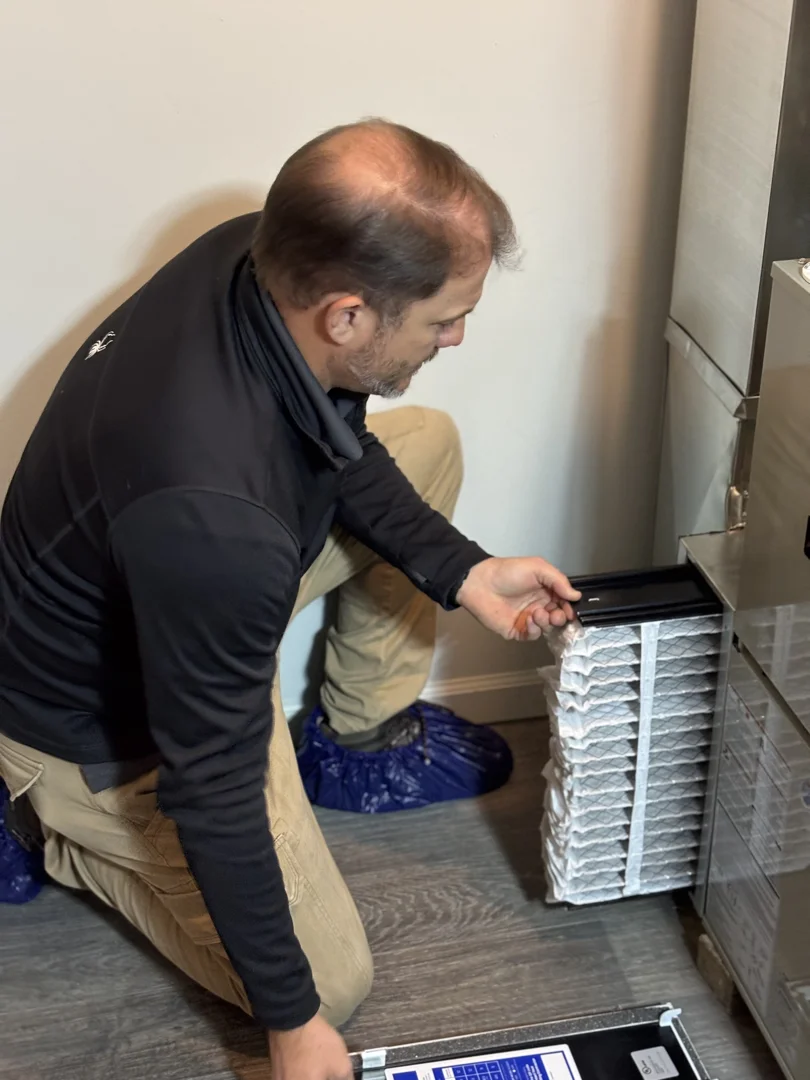
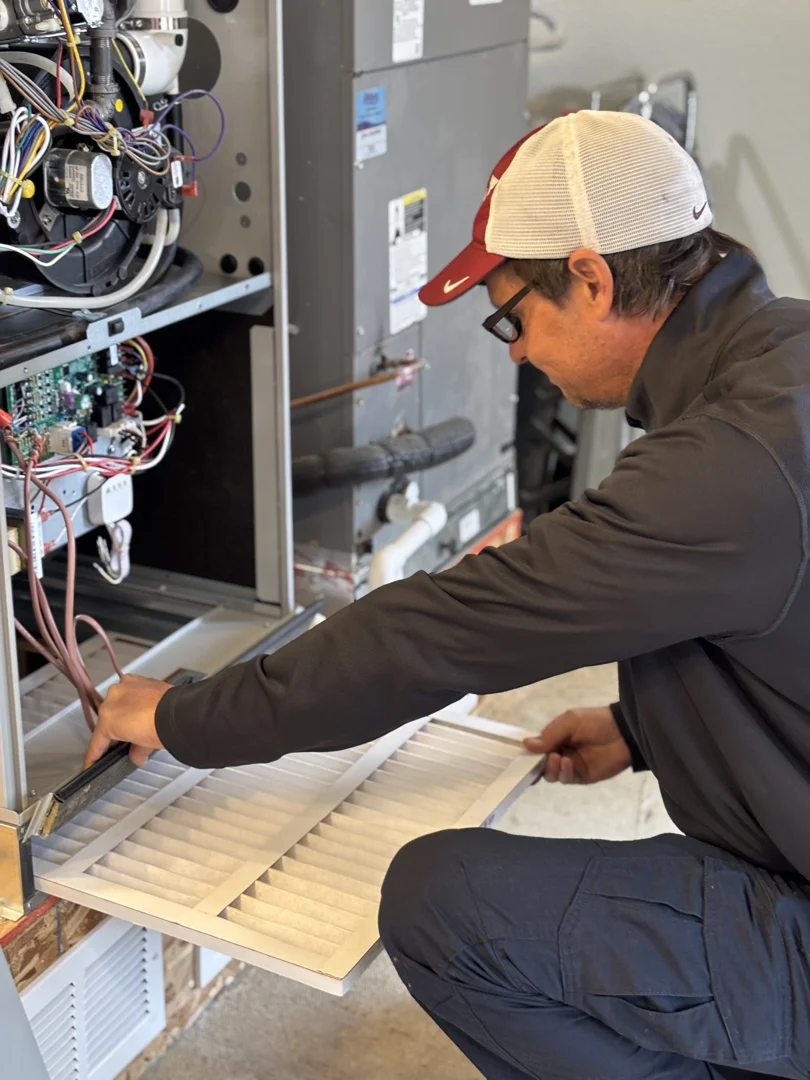
Changing your air filter is one of the easiest and most impactful DIY home maintenance tasks you can perform. It takes less than five minutes, requires zero tools, and provides instant protection for your system.
Step 1: Turn Off Your HVAC System
For safety and to protect your equipment, always turn off your heating and cooling system at the thermostat before changing the filter. If the system is running while you pull the filter out, loose dust and debris can get sucked directly into the blower motor and coils.
Step 2: Locate Your Filter Slot
Your filter is typically located in one of two places:
- Inside a dedicated slot in the return air duct next to your furnace or air handler (often in a basement, utility closet, or attic).
- Behind a hinged return air grille mounted on a central wall or ceiling.
Step 3: Remove the Old Filter and Note the Airflow Direction
Gently slide the old, dirty filter out of its slot. Look closely at the cardboard frame of the old filter before you discard it. You will see an arrow printed on the side indicating the proper direction of airflow.
This arrow always points toward the HVAC unit (furnace or air handler) and away from the return duct. Note this direction so you can install the new one correctly.
Step 4: Inspect and Clean the Slot
Take a quick look inside the empty filter slot. If you see any loose dust, pet hair, or drywall debris clinging to the edges, wipe it down with a damp cloth or vacuum it out with a hose attachment. This prevents that loose debris from immediately clogging your brand-new filter.
Step 5: Insert the New Filter
Slide your new filter into the slot, making sure the airflow arrow points in the correct direction (toward the blower motor). Ensure the filter sits flush and flat within the housing.
If there are gaps around the edges, air will bypass the filter entirely. If you have a loose fit, you can use a small strip of foam weatherstripping to create a tight seal.
Step 6: Write the Date and Turn the System On
Using a permanent marker, write the current date on the cardboard frame of your new filter. This simple step takes away all the guesswork the next time you inspect it. Once the filter is secure, turn your system back on at the thermostat.
Regularly performing this quick routine is a vital part of keeping your system running smoothly year after year. For a broader look at how this fits into your overall home care routine, read about the importance of maintaining your HVAC unit.
Frequently Asked Questions About Air Filter Maintenance
To help you keep your home's air clean and your system running efficiently, we've compiled answers to some of the most common questions homeowners ask about air filters. For an even broader look at filter sizes, MERV ratings, and compatibility, you can check out the HVAC Replacement Air Filters FAQ: Size, MERV, Schedule – Atomic Filters.
What is the difference between cabin air filters and home HVAC filters?
While both filters serve the critical purpose of purifying the air you breathe, they operate in completely different environments and protect different types of mechanical systems.
- Home HVAC Filters: These are large, residential filters designed to handle massive volumes of air circulated throughout an entire house. Their primary job is to protect your home's furnace and air conditioning components from dust accumulation while keeping indoor air clean. They are rated using the MERV scale and are replaced based on calendar months.
- Cabin Air Filters: These are small, highly compact filters located inside your vehicle's ventilation system (usually behind the glove compartment or under the dashboard). Their job is to filter the air entering the passenger cabin through the heating, ventilation, and air conditioning system. They capture road dust, exhaust fumes, pollen, and outdoor odors to keep the air inside your car breathable.
How often should you change a cabin air filter in a vehicle?
Just like your home filter, your vehicle's cabin air filter will eventually become choked with dirt, reducing the airflow from your dashboard vents and causing musty odors inside your car.
- The Mileage Rule: Most automotive experts recommend replacing your cabin air filter approximately every 15,000 miles. However, you should always consult your vehicle's owner's manual for specific manufacturer recommendations.
- Environmental Adjustments: If you regularly drive on dusty gravel roads, live in an area with high seasonal pollen, or frequently idle in heavy city traffic with high smog levels, your cabin filter will clog much faster. In these conditions, you should inspect the filter every 10,000 miles or once a year.
- Signs of Failure: If you notice a lingering stale smell in your car, increased dust settling on your dashboard, or if your defroster takes much longer than usual to clear your windshield, it is likely time for a new cabin air filter.
Is it safe to run an HVAC system without an air filter?
The short answer is no. You should never run your heating and cooling system without a properly installed air filter, even for a single day.
Running your system without a filter allows raw, unfiltered air to pull dust, pet hair, carpet fibers, and dirt directly into your HVAC cabinet. This can lead to severe and incredibly expensive system damage:
- Dirty Evaporator Coils: In the summer, your air conditioner's evaporator coil is cold and wet with condensation. If dust hits this wet coil, it forms a thick, muddy layer that insulates the coil. This prevents the system from cooling your home and can cause the coil to freeze over, potentially destroying your compressor.
- Blower Motor Failure: Dust will quickly settle on the fan blades of your blower motor. This extra weight unbalances the motor, causing it to run hot, lose efficiency, and eventually burn out.
- Ductwork Contamination: Without a filter, dust will accumulate inside your supply and return ductwork, providing a breeding ground for mold and dust mites that will continuously pollute your indoor air.
If you find yourself without a replacement filter, it is actually safer to leave a dirty filter in place for a day or two until you can buy a new one rather than running the system completely bare.
Conclusion
Keeping your home's air clean and your heating and cooling system running at peak performance doesn't have to be a guessing game. By understanding how your home's size, your pets, and the changing Midwest seasons affect your filter's lifespan, you can easily build a personalized filter calendar that keeps your indoor air fresh and your energy bills low.
While changing your filter is an excellent DIY task, it is only one part of keeping your home comfortable year-round. To ensure your system is completely clean, efficient, and ready for whatever the weather throws our way, professional seasonal maintenance is essential.
If you are a homeowner in Johnson County—including Overland Park, Olathe, Lenexa, Shawnee, and Prairie Village—we are here to help. Sign up for a Kansas City HVAC Maintenance Plan today to get professional tune-ups, priority service, and peace of mind knowing your comfort is in expert hands.


.webp)