What Fresh Air Actually Costs You (And Why It Matters Right Now)
ERV and HRV ventilation systems explained simply: both systems pull fresh air into your home and push stale air out, but they do it without wasting the energy you already paid to heat or cool that air. An HRV (Heat Recovery Ventilator) captures heat from outgoing air and uses it to warm incoming air. An ERV (Energy Recovery Ventilator) does the same thing, but also transfers moisture between the two air streams to help keep humidity balanced year-round.
Here's the quick breakdown:
| Feature | HRV | ERV |
|---|
| Recovers heat | Yes | Yes |
| Recovers moisture | No | Yes |
| Best for | Cold, humid winters | Hot humid summers or dry winters |
| Typical efficiency | 60–95% | 70–80% |
Modern homes are built tight. That's great for your energy bill, but it means stale air, odors, humidity, and indoor pollutants have nowhere to go without a mechanical ventilation system pushing them out. According to the Home Ventilating Institute, homes today need mechanical systems like HRVs and ERVs precisely because they no longer "breathe" on their own. In fact, HVAC accounts for roughly one-third of total energy use in most industrialized countries, and poor ventilation is a big part of why.
If your Johnson County home feels stuffy, has moisture on the windows in winter, or just never smells quite fresh, a ventilation system could be the fix you've been overlooking.
ERV and HRV Ventilation Systems Explained
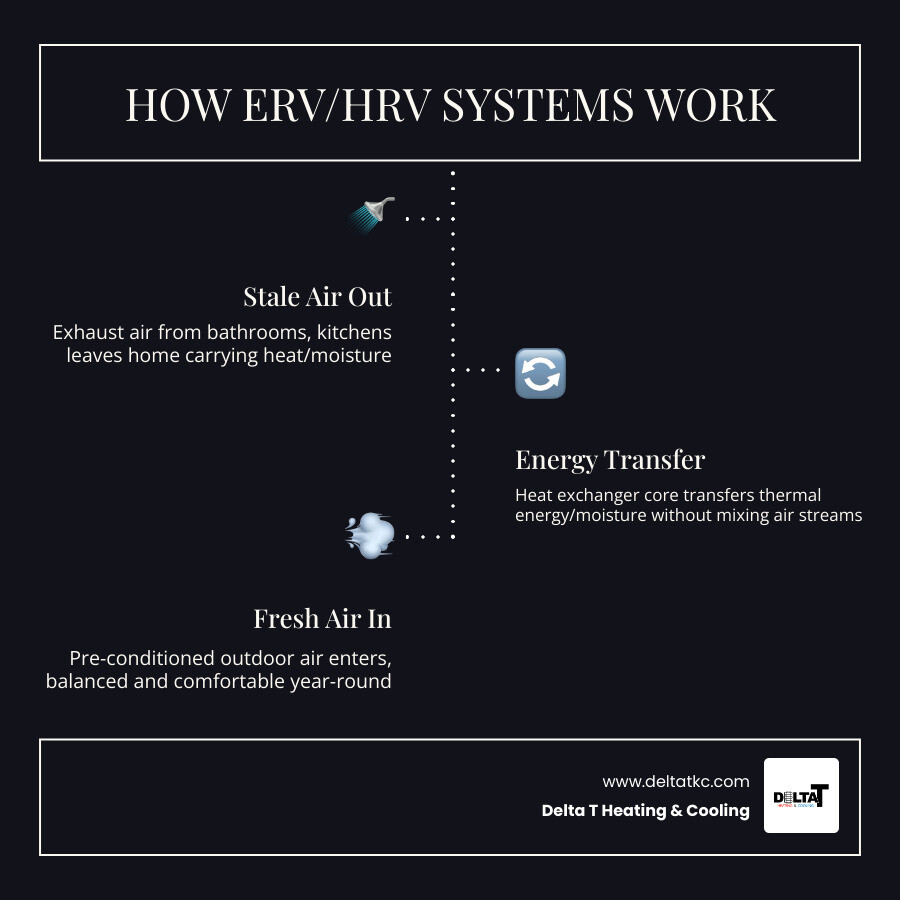
When we talk about Heat recovery ventilation, we are looking at a technology that mimics the way your own body works. Just as your nose warms up cold air before it hits your lungs, these systems pre-condition the air entering your home. In HVAC, these are known as "balanced" ventilation systems. Unlike a simple exhaust fan that just sucks air out, or a supply fan that just pushes air in, these units do both simultaneously.
Inside the box, there is a specialized core—the "heat exchanger." This is where the magic happens. Two separate air streams pass through this core: the stale, warm air from inside your home and the fresh, cold air from outside (or vice versa in the summer). The air streams never actually mix, but because they pass through thin, conductive layers, the heat from the warmer stream "jumps" over to the cooler stream.
This process is incredibly efficient. Most systems can recover between 60% and 95% of the heat that would otherwise be lost through a cracked window or a drafty door. By the time we reach April 2026, these systems have become the gold standard for maintaining a healthy home environment without emptying your wallet on utility bills.
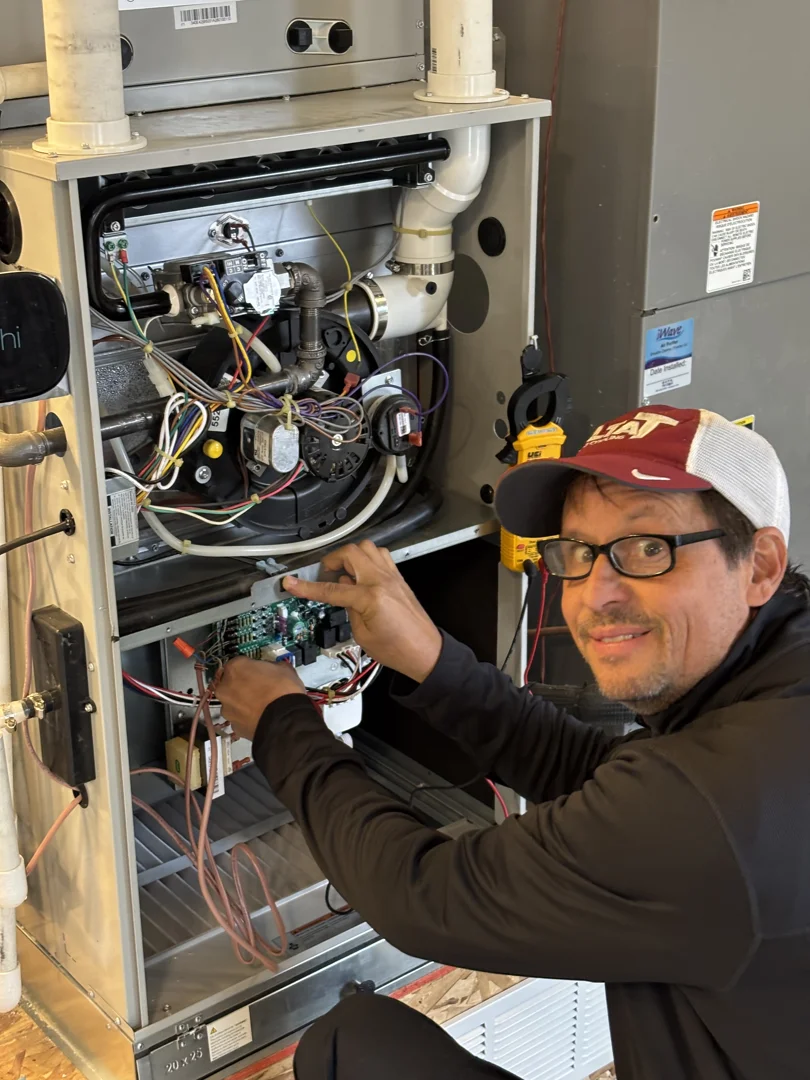
How ERV and HRV Ventilation Systems Explained Improve Comfort
The primary reason we install these systems in places like Overland Park and Lenexa is comfort. When you have "sensible heat" (the temperature you can feel on a thermometer) being recovered, your furnace or air conditioner doesn't have to work nearly as hard.
Think about a typical January day in Kansas. If you open a window to get rid of the smell of last night’s fish dinner, you’re letting in 20-degree air. Your furnace then has to blast heat to bring that air up to 70 degrees. With an HRV or ERV, that 20-degree air is passed through the heat exchanger, where it picks up the thermal energy from the 70-degree air leaving the house. By the time the "fresh" air enters your living room, it’s already been warmed to 60 degrees or higher.
Beyond just temperature, these systems drastically improve indoor air quality. We spend the vast majority of our time indoors, and without proper airflow, we are breathing in VOCs (volatile organic compounds), CO2, and allergens. By ensuring a constant stream of filtered, fresh air, we can reduce respiratory issues and allergies. For a deeper look at why this matters, check out our post on the Importance Proper Ventilation Homes Buildings.
Understanding ERV and HRV Ventilation Systems Explained for New Builds
If you are building a new home in Shawnee or Leawood, you’ve likely noticed that modern construction is incredibly airtight. This is excellent for energy efficiency, but it creates a "thermos effect." Moisture from showers, cooking, and even breathing (did you know a family of four can produce up to 20 liters of moisture a day?) gets trapped inside.
Building codes are increasingly requiring mechanical ventilation to combat this. In airtight homes, natural ventilation—the "leaky house" method of the 1950s—simply doesn't exist. Without a system like an ERV or HRV, you risk mold growth, wood rot, and "sick building syndrome." For those in the middle of a project, our Ventilation Kansas City KS services can help integrate these units into your new construction design seamlessly.
The Main Difference: Heat vs. Moisture Transfer
This is the question we get most often at Delta T Heating & Cooling: "Which one do I need?" The answer lies in how the system handles "latent heat"—otherwise known as humidity.
An HRV (Heat Recovery Ventilator) is a specialist. It focuses entirely on sensible heat. It’s perfect for homes that struggle with high indoor humidity during the winter. If you see condensation dripping down your windows when it’s cold outside, an HRV is likely your best friend. It exhausts that damp, stale air and replaces it with drier, fresh air from outside.
An ERV (Energy Recovery Ventilator) is more of a multitasker. It uses an "enthalpy core," which is a membrane that allows moisture to pass through along with heat. In the summer, an ERV takes the humidity from the incoming fresh air and transfers it to the outgoing exhaust air, keeping your home from feeling like a swamp. In the winter, it does the opposite—it keeps the humidity inside so your skin and sinuses don't dry out.
| Feature | HRV | ERV |
|---|
| Primary Function | Heat transfer only | Heat and moisture transfer |
| Core Material | Aluminum or plastic | Desiccant-treated membrane |
| Best Climate | Cold, dry winters with high indoor moisture | Hot, humid summers or very dry winters |
| Humidity Control | Lowers indoor humidity in winter | Balances indoor humidity year-round |
| Maintenance | Core cleaning and filter changes | Core inspection and filter changes |
As noted in the guide on ERV vs. HRV: Matching systems to your climate and design needs | Panasonic North America - United States, choosing the right system is about matching the technology to your specific lifestyle and home design.
Choosing the Best System for the Kansas City Climate
Living in Johnson County means we deal with the full spectrum of weather. We have bone-chilling, dry winters and sweltering, humid summers. This makes the choice between an HRV and ERV a bit of a strategic decision.
When to choose an ERV in Kansas City:
- Small Households: If you live alone or with one other person in a large home, you likely don't produce enough moisture to keep the air comfortable in winter. An ERV will help retain what little humidity you have.
- Older Homes: If your home was built before the 1970s, it’s likely "leakier." This means your indoor air gets very dry in the winter. An ERV helps mitigate that dryness.
- Summertime Humidity: If you hate that "sticky" feeling in July, an ERV helps your air conditioner by removing moisture from the fresh air before it enters your home.
When to choose an HRV in Kansas City:
- Large Families: Lots of people mean lots of showers, laundry, and cooking. If your home feels "steamy" or your windows are constantly fogging up in the winter, an HRV will help vent that excess moisture.
- Airtight Modern Homes: In very tight new builds, moisture buildup is the number one enemy. An HRV is often the most effective way to keep the air crisp and dry.
To learn more about how these systems fit into our local weather patterns, read about how to Enhance Comfort Energy Efficiency ERV System.
Installation and Maintenance Requirements
Whether you choose an HRV or an ERV, these units aren't "set it and forget it" appliances. To keep them running at peak efficiency for their typical 15- to 20-year lifespan, they need a little TLC.
Installation Options:
- Integrated (Whole-Home): The unit is connected directly to your existing HVAC ductwork. It uses your furnace fan to distribute fresh air throughout the entire house.
- Stand-Alone: The unit has its own dedicated ductwork. This is common in homes with radiant heat or in situations where the existing ducts aren't suitable.
- Ductless: These are smaller units designed for single rooms, like a basement office or a new addition.
Maintenance Checklist:
- Filters: Just like your furnace, these units have filters that catch dust and pollen. We recommend checking them every 3 months and replacing or cleaning them every 6 to 12 months.
- The Core: The heat exchanger core should be inspected annually. HRV cores can usually be washed with soap and water, while ERV cores often require a vacuum or a gentle air blast (check your manual first!).
- Condensate Drain: HRVs produce water as they remove moisture from the air. This drain line needs to be clear to prevent leaks.
- HVI Certification: Always look for the Home Ventilating Institute (HVI) label. This ensures the unit has been independently tested and will actually perform as promised.
For more tips on keeping your system in top shape, see our guide on Improving Ventilation Efficiency HRV Systems.
Frequently Asked Questions about Home Ventilation
Can an ERV or HRV replace my bathroom exhaust fans?
Actually, no. While these systems provide whole-home ventilation, you still need "spot ventilation" in high-moisture or high-odor areas. A bathroom fan is designed to quickly remove a large volume of steam from a shower. If you relied solely on your ERV, that moisture would linger too long. Think of the ERV as the "marathon runner" (slow and steady) and your bathroom fan as the "sprinter" (fast and powerful).
How long do these ventilation systems typically last?
With proper maintenance, you can expect your ERV or HRV to last between 15 and 20 years. The main components are just a couple of fans and a core. As long as the filters are kept clean and the motors aren't strained, they are very durable machines.
Do ERV and HRV systems make a lot of noise?
Modern units are incredibly quiet. Most are rated under 1.0 sone, which is basically a whisper. If the system is installed correctly with vibration-dampening mounts, you likely won't even know it's running. Many units even have variable speed fans that adjust based on the indoor air quality, so they only work as hard as they need to.
Conclusion
At Delta T Heating & Cooling, we believe that your home should be a sanctuary of fresh air and comfort. Whether you’re in Olathe, Mission Hills, or right here in Kansas City, the quality of the air you breathe matters. ERV and HRV ventilation systems explained simply show that you don't have to choose between a low energy bill and a healthy home—you can have both.
If you’re ready to stop guessing and start breathing easier, our team is here to help. We provide professional assessments across Johnson County to help you decide which system is the perfect match for your home’s age, size, and your family’s needs.
Ready to upgrade your indoor air? Explore our Ventilation ERV Services Kansas City KS and let us help you find the breath of fresh air your home deserves.


.webp)