Post Storm HVAC and Plumbing Inspection Checklist: Essential Safety
Delta T Heating & Cooling
Use this post storm HVAC and plumbing inspection checklist to find hidden damage, prevent costly repairs, and protect your home.
What to Check After a Storm: Why a Post-Storm HVAC and Plumbing Inspection Checklist Matters
A post storm HVAC and plumbing inspection checklist is one of the most important tools you have after severe weather hits your home. Storm damage accounts for nearly 49% of all home insurance claims — and the most expensive problems are often the ones you can't see right away.
Here is a quick checklist to get you started:
- Stay safe first — stay at least 35 feet from downed power lines, look for gas odors, and avoid standing water near outlets or equipment
- Inspect the outdoor HVAC unit — check for debris, bent fins, a shifted pad, or signs of flooding
- Check indoor HVAC and ductwork — replace wet filters, look for sagging or water-stained ducts
- Test plumbing — run faucets to check water pressure, listen for running water inside walls, and watch for sewer odors
- Inspect the water heater — do not restart a flooded unit; look for corrosion, shifted components, or a tripped relief valve
- Document everything — take wide-angle and close-up photos and videos before touching or cleaning anything
- Call a professional — if the outdoor HVAC unit was submerged, if you smell gas, or if you see waterlogged electrical panels
What makes storms so tricky is their compound nature. Wind, rain, flooding, and debris often hit at the same time — and the damage overlaps in ways that aren't always obvious until days or weeks later. A small leak behind drywall or a cracked sewer line under saturated soil can quietly turn into a very expensive problem.
For Johnson County homeowners, getting ahead of that hidden damage quickly is what separates a manageable repair from a major renovation.

Safety First: Crucial Steps Before Beginning Your Post-Storm HVAC and Plumbing Inspection Checklist
When the storm clouds clear over Shawnee, Olathe, or Overland Park, it is tempting to run outside in your flip-flops to check the yard. However, severe weather can turn your property into a hazard zone. Saturated ground, high winds, and lightning strikes leave behind hidden dangers that require your complete attention.
Before you touch a single pipe or look at your air conditioner, you must establish a safe perimeter. This is not the moment for optimism; it is the moment for caution.
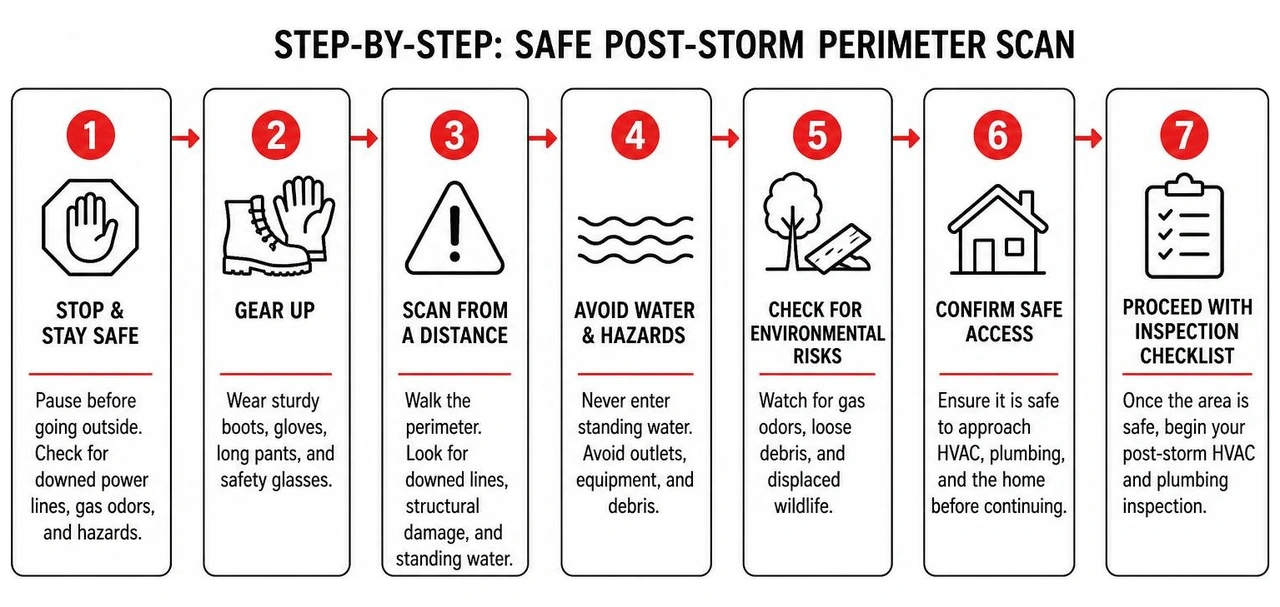
To protect yourself and your family, always follow these fundamental safety protocols:
- Keep your distance: Stay at least 35 feet away from any downed power lines. Treat every wire as if it is live and carrying high voltage, even if the neighborhood power is out.
- Gear up properly: Put on sturdy, rubber-soled boots, heavy-duty work gloves, long pants, and safety glasses.
- Watch out for displaced wildlife: Severe weather and localized flooding displace local wildlife. Be prepared for snakes, rodents, or insects seeking dry shelter in crawlspaces, window wells, or even inside your outdoor HVAC cabinet.
- Never enter standing water: If your basement or yard is flooded, do not walk through the water. It could be energized by submerged electrical outlets or contaminated with raw sewage.
Understanding how these hazards interact with your utilities is key to keeping your family safe. For more local insights, read our guide on How Kansas City Severe Weather Affects Your Home Systems.
Identifying Immediate Electrical and Gas Hazards
Your home's electrical and gas systems are highly vulnerable during severe weather. A lightning strike or a fallen tree branch can easily rupture a gas line or send a devastating power surge through your home's wiring.
If you smell a rotten egg odor—which indicates a natural gas leak—or hear a whistling or hissing sound near your gas meter, evacuate the area immediately. Do not flip any light switches, light a match, or use your phone until you are a safe distance from the property. Once you are safe, call your utility provider and emergency services.
When it comes to electrical systems, water and electricity are a deadly combination. Inspect your main electrical panel from a dry location. If you notice water leaking into the panel, waterlogged breakers, or if the floor beneath the panel is wet, do not touch it.
Power surges during storm restoration can quietly fry delicate circuit boards inside modern heating and cooling systems without leaving visible burn marks. To protect your equipment from these silent killers, consider surge protection for your residential property. If you suspect electrical damage, always schedule a certified electrical inspection before turning your appliances back on.
Protecting Yourself from Contaminated Water and Structural Instability
Heavy rains can quickly overwhelm local drainage systems, leading to water backup or structural shifting. When water enters your home, you must treat it with caution. The IICRC S500 standard classifies water damage into three categories:
- Category 1 (Clean Water): Water from broken water supply lines or rainwater.
- Category 2 (Gray Water): Water that contains significant contamination, such as washing machine discharge or sump pump overflows.
- Category 3 (Black Water): Highly contaminated water, including sewage backups or river/lake flooding. This water contains harmful pathogens and requires professional remediation.
Beyond water hazards, high winds can cause "structural racking." This occurs when wind forces push the house sideways, warping doorframes and shifting load-bearing structures. If you notice diagonal cracks around doorways, or if your front door suddenly jams and won't close, your home may have structural damage.
Outdoor and Indoor HVAC System Assessment
Once you have verified that the property is structurally safe and free of electrical or gas hazards, you can begin your physical post storm hvac and plumbing inspection checklist. We start with the heating, ventilation, and air conditioning (HVAC) systems. These systems are highly susceptible to wind-driven rain, flying debris, and electrical spikes.
To keep your system running efficiently year-round, check out our Pre-Summer AC Inspection Guide.
Outdoor Condenser Checks on Your Post Storm HVAC and Plumbing Inspection Checklist
Your outdoor condenser unit is designed to withstand typical weather, but severe storms can push it past its limits. High-velocity winds can turn patio furniture, tree branches, and loose shingles into projectiles that dent cabinets and crush delicate components.
Walk around your outdoor unit and check the following:
- Clear the perimeter: Remove leaves, branches, mud, and weeds. Your condenser needs 12 to 24 inches of clear, unobstructed airflow around it to operate efficiently. Storm debris inside the unit can block up to 25% of its airflow, putting severe strain on the compressor.
- Inspect the aluminum fins: These thin metal grates dissipate heat. If they are flattened or dented by hail or debris, heat exchange is restricted. We use the "30% Rule": if more than 30% of your condenser fins are flattened, the airflow restriction is too severe to run the system safely without risking compressor failure. Do not attempt to straighten them with a screwdriver, as you risk puncturing the copper coils underneath.
- Check the concrete pad: Saturated soil can shift or wash out, causing the concrete pad beneath your AC to tilt. If the pad is unlevel, it puts stress on the copper refrigerant lines and causes the oil inside the compressor to settle unevenly.
- Look for oily residue: Inspect the copper refrigerant lines and their connections. Because refrigerant oil circulates with the gas, oily stains around these fittings often indicate a refrigerant leak.
Indoor HVAC and Ductwork Inspection
The indoor portion of your HVAC system is just as vulnerable to storm damage, particularly from water intrusion. Wind-driven rain can sneak under roof shingles, traveling down walls and dripping directly onto your furnace or air handler.
Start by checking your air filter. If the filter is damp or wet, replace it immediately. Operating your system with a wet filter restricts airflow, which can freeze your evaporator coil. Furthermore, a wet filter becomes a breeding ground for mold, which can spread spores throughout your home within 24 to 48 hours.
Next, inspect your ductwork. If you have accessible ducts in your basement, crawlspace, or attic, look for:
- Sagging or disconnected sections: Heavy water accumulation can weigh down insulated flexible ducts, causing them to tear or collapse.
- Water stains or condensation: Damp spots on your ductwork indicate water leaks or high humidity.
- Musty odors: A strong, earthy smell when the system turns on is a clear sign of mold growth inside the ducts.
To understand how proper moisture management keeps your home safe, read about How Humidity Control Prevents Mold in Your Home.
Plumbing and Water Heater Inspection
Plumbing systems are often overlooked after a storm because most of the pipes are hidden behind walls or buried underground. However, shifting soils, heavy rains, and lightning strikes can cause major plumbing failures that are highly destructive if left ignored.
If your drains are running slow or backing up after a heavy downpour, you may need a professional Drain Cleaning Kansas City KS.
Checking for Plumbing Leaks and Sewer Backups
Heavy rainfall saturates the ground, causing the soil to expand and shift. This movement puts immense physical pressure on underground pipes, which can crack or loosen connections.
To catch hidden leaks before they cause structural damage, perform a simple water meter test:
- Turn off every faucet, shower, and water-using appliance in your home.
- Locate your water meter (usually in your basement or near the street).
- Watch the small leak indicator dial (often a red or blue triangle) or the sweep hand.
- If the dial is moving even slightly while all water is shut off, you have a hidden leak in your plumbing system.
Additionally, listen closely. Walk through your home during a quiet moment and listen for the sound of running or dripping water behind your drywall.
Saturated ground can also affect your sewer system. If the municipal sewer lines are overwhelmed by storm runoff, waste can back up into your home's lowest drains. Watch for gurgling toilets, slow-draining tubs, or foul sewer odors coming from your floor drains. If you suspect a sewer backup, avoid flushing toilets or running water, as this will worsen the backup.
Evaluating Water Heater Health on Your Post Storm HVAC and Plumbing Inspection Checklist
Your water heater is highly vulnerable to storm damage, especially if your basement or utility closet experienced flooding. Whether you have a gas or electric water heater, water exposure can create severe safety hazards.
If floodwaters reached the base of your water heater, do not attempt to turn it on or relight the pilot light.
Even if the water has receded and the exterior looks dry, the internal fiberglass insulation acts like a sponge. It holds moisture directly against the steel tank, causing it to rust from the outside in. This can lead to a sudden tank failure weeks after the storm.
Additionally, water can damage gas control valves, electronic ignition systems, and thermostats, creating fire and electrical hazards. If your water heater was exposed to water, it must be inspected by a professional plumber before being returned to service.
Documenting Damage and Knowing When to Call a Professional
If you find damage during your inspection, your next step is thorough documentation. This is critical for supporting your insurance claims and ensuring you get the coverage you deserve.
Follow these photo and video protocols:
- Take wide shots first: Capture the entire room or area to provide context for the insurance adjuster.
- Get close-ups: Photograph specific damage points, such as bent condenser fins, water stains, or cracked pipes.
- Use a scale reference: Hold a measuring tape or ruler next to water stain lines to show the depth of the flooding.
- Document serial numbers: Take clear photos of the manufacturer labels and serial numbers on your HVAC and plumbing equipment.
- Keep all receipts: Save receipts for any emergency cleanup supplies, tarps, or temporary mitigation efforts. Standard homeowners policies require you to take reasonable steps to prevent further damage.
Use this decision matrix to help you decide when to handle an issue yourself and when to call in the experts:
| System / Area | DIY Inspection Actions | When to Call a Professional |
|---|---|---|
| Outdoor HVAC | Clear loose leaves; inspect cabinet for dents; check pad leveling. | Unit was submerged; refrigerant lines are bent/hissing; >30% of fins are bent. |
| Indoor HVAC | Replace air filters; look for water stains on furnace cabinet. | Blower motor or electrical components are wet; ductwork is sagging or molding. |
| Plumbing | Check under sinks for drips; run water meter leak test. | Water meter indicates a leak; gurgling drains; persistent sewer odors. |
| Water Heater | Check relief valve for leaks; inspect exterior for rust. | Floodwater reached the base; gas control valve was wet; electrical ignition fails. |
To keep your systems in peak condition, read about what happens during a standard HVAC Maintenance Visit Complete Guide and use our Checklist for Furnace Maintenance to keep your heating system running safely.
Frequently Asked Questions About Post-Storm Inspections
Is it safe to turn on my AC if the outdoor unit was submerged?
No, it is not safe to turn on your air conditioner if the outdoor unit was submerged in water. Silt, mud, and moisture can get trapped inside the electrical contactors, fan motor, and compressor terminals.
If you turn the system on while these components are wet or filled with debris, you risk causing a catastrophic short circuit, permanent motor failure, or an electrical fire. Always have a licensed technician perform an insulation test and clean the unit before turning it back on. For more details on what to expect during an emergency visit, read our guide on Emergency HVAC Repair What to Expect.
How quickly does mold start growing after water intrusion?
According to the IICRC S520 standard, mold can begin growing within 24 to 48 hours of water exposure in a warm, humid environment. This makes rapid water extraction and drying critical. If you discover wet drywall, damp insulation, or standing water, you must act quickly to dry the area and control humidity levels to prevent mold from spreading through your home's structure and ductwork.
Why is my water pressure low after a major storm?
Low water pressure after a storm can be caused by several factors:
- Municipal issues: The local water utility may have experienced a main break or a power outage at their pumping stations.
- Main line leak: Shifting ground or growing tree roots can crack your main water line, allowing water to escape into the soil.
- Sediment buildup: Storms stir up sediment in municipal water lines, which can travel into your home and clog your faucet aerators and appliance inlet screens.
Conclusion
A severe storm can be stressful, but taking a systematic approach to your post storm hvac and plumbing inspection checklist helps you protect your home, your family, and your budget. By identifying hidden issues early, you prevent minor leaks and electrical glitches from turning into expensive, long-term headaches.
At Delta T Heating & Cooling, we are proud to serve our neighbors across Johnson County—including Overland Park, Olathe, Shawnee, Lenexa, Leawood, and the surrounding areas. We are committed to providing prompt, honest, and professional service at affordable prices.
If your post-storm inspection reveals any concerns with your heating, cooling, or ventilation systems, don't wait for the damage to spread. Schedule your post-storm inspection today and let our experienced, licensed technicians bring comfort and peace of mind back to your home.
Talk to us
Need Help?
Engineer-led diagnosis. Upfront pricing. Free second opinions on outside quotes.
More Articles
View All PostsReady to Get Started?
Whether you need a repair, maintenance, or a new installation, our expert team is here to help.