Spring HVAC Transition From Heating To Cooling: 5 Essential Tips
Delta T Heating & Cooling
Master the spring HVAC transition from heating to cooling with simple DIY steps and professional tune-ups for efficient, fresh spring comfort.
What Every Johnson County Homeowner Should Know Before Flipping the Switch This Spring
The spring HVAC transition from heating to cooling is one of the most important seasonal tasks you'll tackle as a homeowner — and it's a lot more involved than just turning a dial on your thermostat.
Here's a quick overview of what the transition involves:
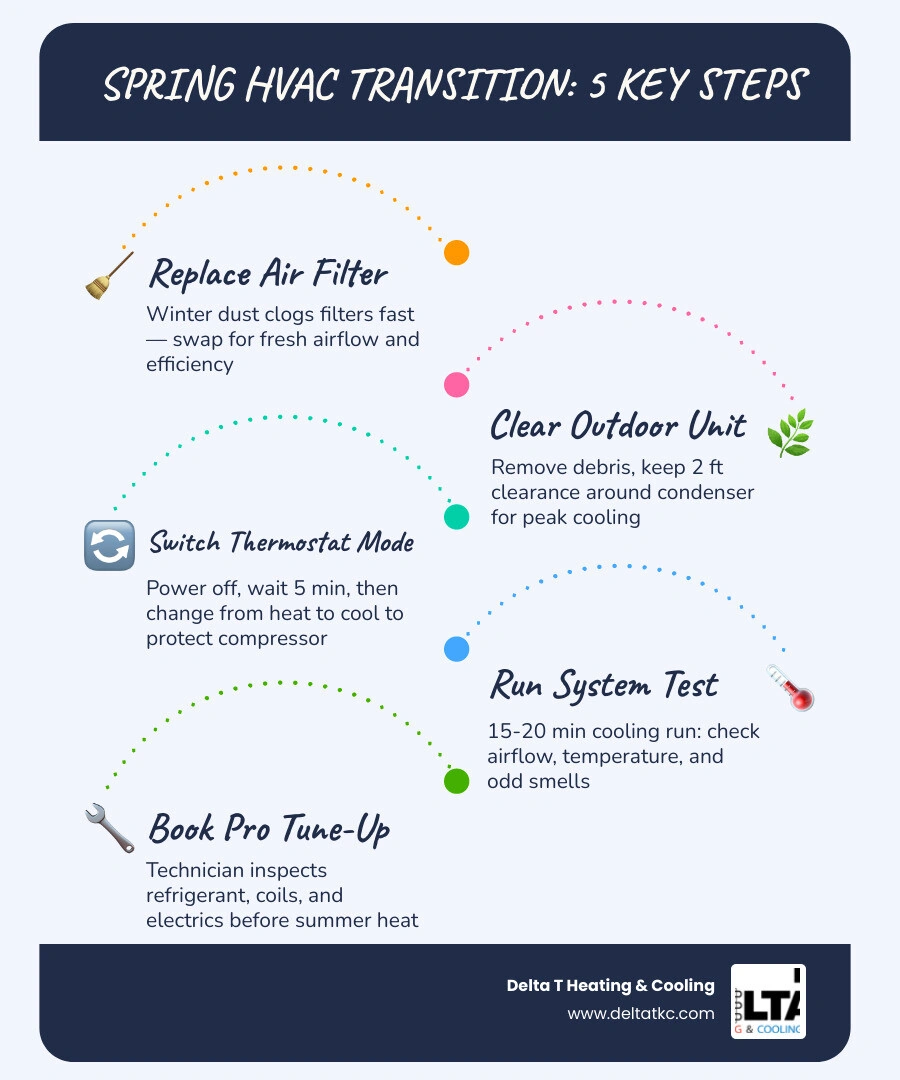
- Replace your air filter — winter heating loads dust and debris into your filter fast
- Clear the outdoor condenser unit — remove debris and maintain at least 2 feet of clearance on all sides
- Switch your thermostat to cooling mode — turn the system off first, wait 5 minutes, then switch
- Run a 15-20 minute cooling test — check for weak airflow, warm air, or unusual smells
- Inspect accessible ductwork — leaky ducts can waste up to 30% of conditioned air
- Schedule a professional tune-up — a technician can check refrigerant levels, electrical connections, and coil condition before summer demand peaks
Most homeowners assume switching from heat to cool is simple. But after months of hard heating-season work, your system has accumulated wear, dust, and stress that can turn a minor overlooked issue into a full breakdown on the first hot day of summer. In Johnson County, where spring weather can swing from chilly mornings to warm afternoons in a matter of hours, getting ahead of that transition is the difference between a comfortable summer and a costly emergency call.
This guide walks you through every step — what you can do yourself, what needs a pro, and how to protect your system before the heat arrives.
Spring hvac transition from heating to cooling definitions:
Why the Spring HVAC Transition from Heating to Cooling Matters
Flipping your thermostat from "heat" to "cool" feels like a celebratory rite of passage. It means we’ve survived another chilly Midwestern winter, and sunny backyard barbecues are just around the corner. However, your HVAC system doesn't view this transition with the same carefree excitement. To your heating and cooling equipment, spring is like an athlete transitioning from a grueling winter marathon straight into a summer sprint without a rest day.
During the cold months of winter, your furnace or heat pump works overtime to keep your family warm. This constant operation causes natural wear and tear on internal components. Moving parts lose their lubrication, electrical connections face heat-induced expansion and contraction, and dust accumulates throughout the system.
If you make the spring hvac transition from heating to cooling without assessing the physical state of your equipment, you risk triggering a major system failure.
Skipping seasonal preparation can directly impact your household in three major areas:
- System Efficiency and Energy Bills: When an air conditioner is forced to run with dirty coils, clogged filters, or restricted airflow, it has to work twice as hard to cool your home. Did you know that leaky ducts can waste up to 30% of your conditioned air? That is essentially throwing money directly into your attic or crawlspace. Ensuring your system is clean and sealed before summer keeps your utility bills from skyrocketing.
- Indoor Air Quality (IAQ): Throughout winter, your HVAC system recirculates the same indoor air, trapping dust, pet dander, and microscopic debris. When spring arrives in Johnson County, outdoor pollen counts climb rapidly. Without proper maintenance, your HVAC system will simply distribute these accumulated allergens throughout your living spaces, triggering seasonal allergies and asthma.
- Protecting Equipment Lifespan: An air conditioner is a major home investment. Running a system that has low refrigerant or a failing electrical capacitor puts immense strain on the compressor. If the compressor fails, you may face a costly replacement. Regular seasonal care keeps small, inexpensive issues from turning into catastrophic failures.
To learn more about why proactive care is so vital for your home's comfort, read our detailed guide on the Importance of Maintaining Your HVAC Unit. For a broader look at transitioning your home comfort systems, you can also explore this helpful resource on Heating to Cooling: How to Transition Your HVAC System for Spring.
Essential DIY Steps to Prepare Your System for Summer
While complex electrical diagnostics and refrigerant handling must always be left to certified professionals, there are several highly effective tasks you can perform yourself to prepare your home for the upcoming cooling season.
Taking a proactive, hands-on approach to your system's physical environment is one of the best ways to prevent emergency breakdowns. To get started, read our checklist on Essential Spring AC Preparations.
Step-by-Step Guide for Your Spring HVAC Transition from Heating to Cooling
Follow this straightforward, step-by-step checklist to safely prepare your system for its summer duties:
1. Perform the "Light Test" on Your Air Filter
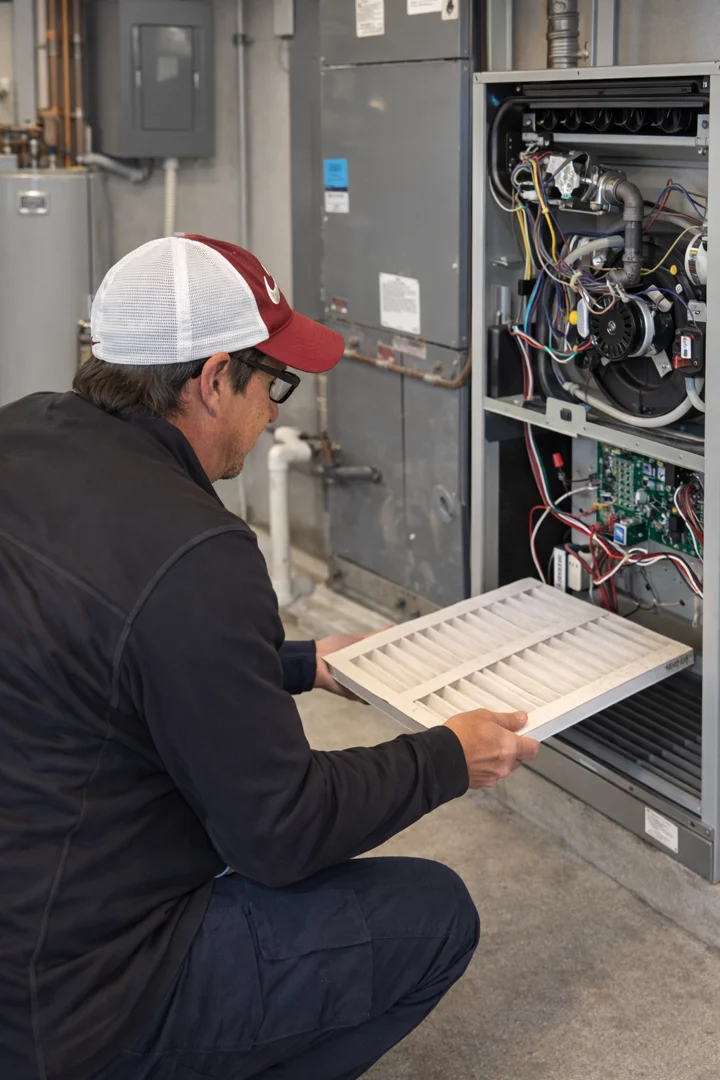
Before you even think about turning on the air conditioner, check your air filter. Pull the filter out of its slot and hold it up to a bright light source. If you cannot see light passing through the fibers, the filter is completely clogged with winter dust and must be replaced immediately. A clogged filter starves the system of airflow, which can cause your indoor evaporator coils to freeze over into a solid block of ice. Write the installation date on the edge of your new filter so you can easily track its age. For more detailed filter tips, refer to our Spring Air Filter Replacement Guide.
2. Clear and Clean the Outdoor Condenser Unit
Your outdoor condenser unit needs room to breathe. Over the fall and winter, wind pushes leaves, twigs, grass clippings, and mulch against the metal grates.
- Clear away all debris to establish at least a two-foot clearance zone around the entire unit.
- Trim back any nearby bushes, ornamental grasses, or low-hanging tree branches.
- Inspect the delicate metal fins on the unit. If they are covered in dirt or pollen, gently spray them down with a standard garden hose. Never use a pressure washer, as the intense water pressure will instantly bend and ruin the aluminum fins, permanently restricting airflow.
3. Open and Clear All Indoor Vents
Walk through your home and inspect every single supply and return register. Ensure that no rugs, furniture, heavy drapes, or children's toys are blocking the vents. Closing vents in unused rooms does not save energy; instead, it increases static pressure within your ductwork, forcing your blower motor to work harder and potentially causing system damage. Use a vacuum attachment to clear away any visible dust on the vent louvers.
4. Run a Controlled System Test
Don't wait until the first 90-degree afternoon in June to find out if your air conditioner works. On a mild spring afternoon when outdoor temperatures are in the mid-70s, perform a trial run:
- Turn your thermostat to "Off."
- Wait at least 5 minutes to let system pressures equalize.
- Switch the mode to "Cool" and set the temperature a few degrees below the current room temperature.
- Let the system run for 15 to 20 minutes.
During this test, listen for any unusual grinding, squealing, or rattling noises, and verify that cool air is actively blowing from your vents. If anything seems amiss, you can troubleshoot using this guide on How to Transition Your HVAC System from Heating to Cooling Mode.
Optimizing Thermostat Settings and Indoor Air Quality
Managing your indoor climate during the spring requires a careful balance of temperature control, humidity management, and filtration. As the outdoor climate shifts, your thermostat serves as the brain of your entire comfort system.
Upgrading to a programmable or smart thermostat is one of the easiest ways to keep your energy bills under control. In fact, utilizing a programmable thermostat correctly can cut your heating and cooling costs by about 10% annually. Smart thermostats go a step further by learning your family's daily habits, providing detailed energy reports, and automatically adjusting temperatures when you are away at work or asleep.
Beyond temperature, spring brings significant humidity fluctuations to the Kansas City area. Air conditioners naturally act as dehumidifiers, extracting moisture from the air as it passes over the cold evaporator coils. However, if your system is dirty or poorly calibrated, it won't run long enough to properly balance humidity, leaving your home feeling sticky and stuffy.
Maintaining indoor humidity levels between 30% and 50% is critical for preventing mold growth and keeping your family comfortable. For more optimization tips, check out our guide on Spring AC and HVAC Maintenance.
Managing Thermostat Settings During the Spring HVAC Transition from Heating to Cooling
Spring in Johnson County is notorious for "thermostat whiplash." You might wake up to a chilly 45-degree morning requiring a bit of heat, only to experience a sunny, 75-degree afternoon that calls for cooling. This rapid back-and-forth can place massive strain on older HVAC systems if not managed carefully.
To protect your equipment, keep these professional thermostat practices in mind:
- Implement a Deadband Range: If you use a thermostat with an "Auto" mode (which automatically switches between heating and cooling), ensure you set a "deadband" of at least 3 to 5 degrees. This safety buffer prevents your heater and air conditioner from fighting each other and short-cycling throughout the day.
- Observe the 5-Minute Rule: If you manually switch your system from heat to cool, always set the thermostat to "Off" first and wait at least five full minutes before selecting the cooling mode. This delay allows the refrigerant pressures in your compressor to equalize safely, preventing electrical overloads or mechanical damage.
- Avoid Extreme Temperature Settings: Setting your thermostat to 60°F will not make your home cool down any faster. It only forces your system to run longer, wasting energy and risking a frozen evaporator coil. Stick to a comfortable, steady target temperature like 78°F when you are home, and raise it when you are away.
Increased system run times during seasonal shifts mean more air is circulating through your home, which means your filter will fill up faster. Make sure you understand How Often Should You Change Your HVAC Air Filter to keep your airflow unrestricted during these high-pollen spring months.
Common Issues Discovered During the Seasonal Switch
When an HVAC system sits dormant or transitions between modes, underlying mechanical and electrical issues often make themselves known. Being aware of these common spring problems can help you catch them before they turn into major repairs.
To help you understand what to prioritize during this transitional "audit" period, review this comparison of seasonal care focuses:
| Post-Winter Transition Priorities (Spring) | Pre-Winter Transition Priorities (Fall) |
|---|---|
| Pollen & Allergen Removal: Cleaning outdoor coils and replacing clogged filters. | Debris & Pest Protection: Sealing entry points and clearing autumn leaves. |
| Condensate Drain Clearing: Flushing lines to prevent summer water damage. | Heat Exchanger Inspection: Checking for cracks to prevent carbon monoxide leaks. |
| Refrigerant Level Verification: Ensuring proper cooling capacity. | Ignition & Burner Cleaning: Ensuring reliable furnace startup. |
| Ductwork Leak Inspection: Sealing leaks to maximize airflow efficiency. | Thermostat Calibration: Ensuring accurate heating cycles. |
When you first start up your air conditioner in June 2026, keep your eyes, ears, and nose open for these common warning signs:
- Musty or Dusty Smells: If your home smells like old, dirty socks when the AC first kicks on, you may be experiencing "Dirty Sock Syndrome." This occurs when moisture, dust, and organic matter build up on your indoor evaporator coils, creating a breeding ground for mold and bacteria.
- Weak Airflow: If you feel only a faint breeze coming from your supply vents, you could have a severely clogged air filter, loose ductwork joints, or a failing blower motor.
- Frozen Coils: If you notice ice forming on the brass refrigerant lines of your outdoor unit or on the indoor coil casing, shut the system off immediately. Frozen coils are typically caused by restricted airflow (dirty filters/vents) or low refrigerant levels.
- Strange Noises: Squealing, grinding, or loud rattling noises indicate mechanical issues, such as a failing fan belt, loose components, or a compressor nearing the end of its lifespan.
If you notice any of these warning signs, don't ignore them. Take a look at our guide on 5 Common Springtime AC Problems to understand what might be happening behind the scenes.
The Role of Professional Maintenance in Johnson County
While DIY steps are a fantastic foundation for home comfort, they cannot replace the specialized tools, diagnostic instruments, and technical expertise of a professional HVAC technician. Your cooling system relies on complex electrical circuits, high-pressure chemical refrigerants, and finely balanced mechanical parts that require expert calibration.
During a professional spring maintenance visit, a trained technician will perform several critical services:
- Refrigerant Pressure Checks: Running an air conditioner with low refrigerant causes the compressor to overheat and eventually fail. Technicians measure pressures and check for leaks using electronic leak detectors, ensuring your system has the exact charge specified by the manufacturer.
- Electrical Component Inspections: Technicians inspect contactors and test electrical capacitors. Capacitors act like temporary batteries that help start your system's motors; if they drift out of their safety specifications, they can cause motor burnouts. Tightening loose electrical connections prevents system failures and reduces fire risks.
- Deep Coil Cleaning: While a garden hose can clear loose leaves from your outdoor unit, professional-grade coil cleaners are required to dissolve baked-on grime, pollen, and dust from both the indoor evaporator coil and outdoor condenser coil. Clean coils allow for optimal heat transfer, maximizing your system's efficiency.
- Condensate Drain Line Flushing: Dust and mold can easily clog your AC's condensate drain line over the summer. A technician will clear out any blockages and flush the line to prevent water overflows that could damage your ceilings or drywall.
To understand exactly what goes into a professional visit, check out our Complete Guide to AC Tune-Up and our Pre-Summer AC Inspection Guide.
If you are looking for a reliable team to prepare your home's air conditioner for the hot summer months in Lenexa, Overland Park, Olathe, or Shawnee, we are here to help. For prompt, professional, and honest cooling support, visit our AC Service in Kansas City page to schedule your seasonal tune-up.
Frequently Asked Questions about Seasonal HVAC Changes
When is the best time to switch from heating to cooling mode?
The ideal time to transition your system is during the mild "shoulder season" weeks of spring, well before the first true heatwave of summer arrives. As a general rule of thumb, look for a period when daytime temperatures consistently reach the mid-70s and overnight lows stay above 50°F.
Performing your trial run and maintenance during this mild weather ensures that if an issue is discovered, you have plenty of time to get it resolved without having to suffer through a hot house. For more advice on managing your system during mild weather, check out How to Maintain Your AC Unit During the Off-Season.
Can I run my heat and AC on the same day?
Yes, it is entirely safe to run both your heating and cooling on the same day, which is often necessary during unpredictable Midwestern spring weather. However, you must protect your compressor from mechanical shock.
Always turn your system to "Off" at the thermostat, wait at least five full minutes for refrigerant pressures to settle, and then switch to the opposite mode. Utilizing a smart thermostat with an automatic deadband setting is the easiest way to manage this safely. For more practical homeowner advice, read our HVAC Maintenance Tips for Homeowners.
Why does my AC smell musty when I first turn it on in the spring?
A temporary dusty smell is normal as settled particles burn off or blow out of your ductwork. However, a persistent musty, damp, or "dirty sock" odor indicates mold, mildew, or bacterial growth on your indoor evaporator coil or in your condensate drain pan.
Because your air conditioner naturally removes moisture from the air, the dark, damp environment inside your indoor unit is a perfect breeding ground for organic growth. A professional coil cleaning and system sanitization will resolve this issue, protecting your indoor air quality and keeping your home smelling fresh. Learn how to stay ahead of these issues with our guide on How to Prevent HVAC Emergencies with Maintenance.
Conclusion
Mastering the spring HVAC transition from heating to cooling doesn't have to be a stressful chore. By taking a few simple, proactive steps — like changing your air filters, clearing space around your outdoor condenser, and testing your thermostat settings safely — you can protect your equipment, keep your energy bills under control, and ensure your home remains a cool, comfortable sanctuary all summer long.
At Delta T Heating & Cooling, we are proud to serve homeowners throughout Johnson County, including Overland Park, Olathe, Shawnee, Lenexa, Leawood, and the surrounding communities. We believe in providing prompt, honest, and professional service at affordable prices, complete with clear, detailed explanations so you always know exactly how your system is performing.
Don't wait for the summer heat to catch you off guard. Schedule professional HVAC services with us today, and let our experienced team give you complete peace of mind for the warm months ahead!
Talk to us
Need Help?
Engineer-led diagnosis. Upfront pricing. Free second opinions on outside quotes.
More Articles
View All PostsReady to Get Started?
Whether you need a repair, maintenance, or a new installation, our expert team is here to help.