Why Oversized HVAC Systems Waste Energy: Shocking Truth
Delta T Heating & Cooling
Learn why oversized HVAC systems waste energy and increase costs, plus how right-sizing improves comfort and efficiency.
Why Oversized HVAC Systems Waste Energy: The Physics of Short Cycling
Why oversized HVAC systems waste energy comes down to one core problem: a system that is too large for your home cools the space too fast, shuts off before it reaches peak efficiency, and then restarts — over and over again. This constant starting and stopping is called short cycling, and it is one of the most expensive and damaging things that can happen to your heating and cooling equipment.
Here is a quick summary of the main reasons an oversized HVAC system wastes energy:
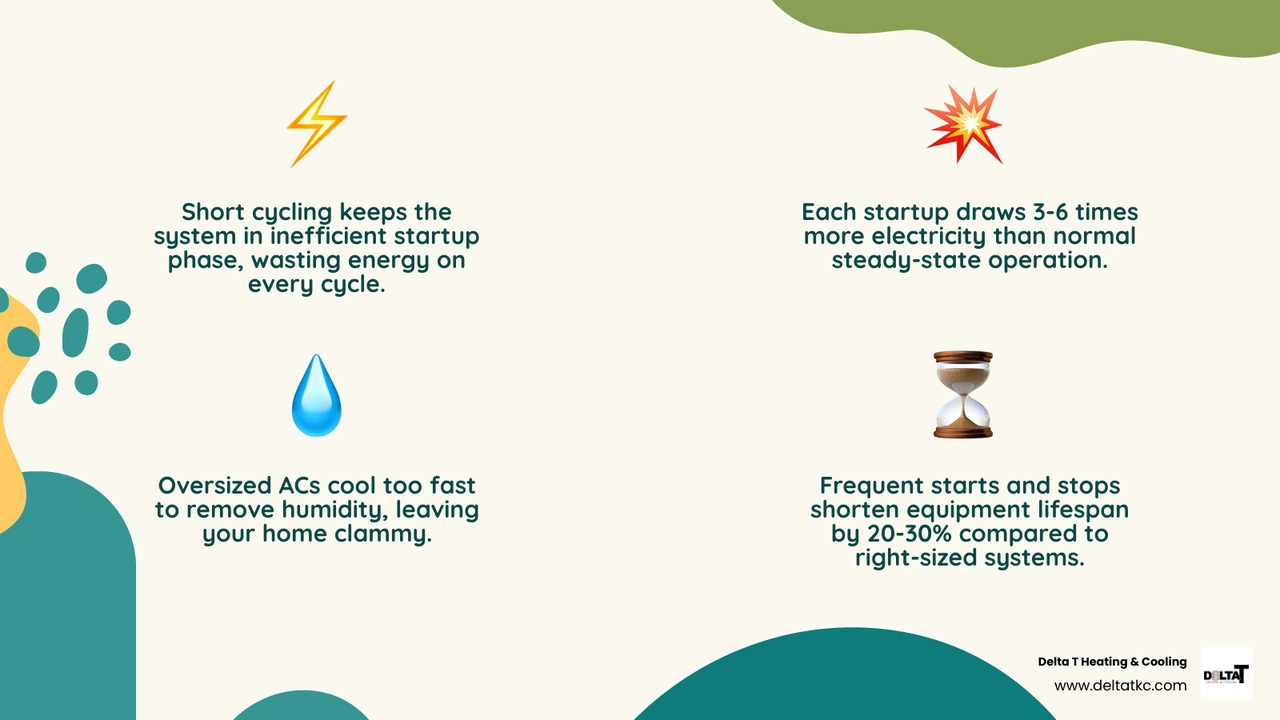
- Short cycling: The system shuts off too quickly, spending most of its time in the inefficient startup phase rather than steady, efficient operation.
- Inrush current spikes: Every startup draws 3 to 6 times more electricity than normal steady-state operation.
- Poor humidity control: The system cools the air before it can remove moisture, leaving your home feeling clammy even at comfortable temperatures.
- Thermostat chasing: Clammy air causes homeowners to lower the thermostat further, burning even more energy.
- Accelerated wear: Frequent starts and stops shorten equipment lifespan by 20 to 30 percent compared to a properly sized system running longer, steadier cycles.
The numbers tell a clear story. Extending a single cooling cycle from just 5 minutes to 9 minutes can improve efficiency by roughly 17 percent. And incorrectly sized systems can inflate annual energy costs by 20 to 30 percent — adding over $1,400 per year for an average home. Despite this, a large share of residential HVAC systems installed before 2010 were oversized by at least 15 percent, largely because contractors relied on outdated square footage rules of thumb instead of proper engineering calculations.
I'm Adam Golubski, and in this guide I'll walk you through exactly what is happening inside an oversized system, why it matters for your home's comfort and your wallet, and what you can do about it.
Know your why oversized hvac systems waste energy terms:
- getting the right size hvac for the kansas city metro homes
- how proper hvac sizing affects comfort
- why correct system sizing matters for your home
When an air conditioner or heat pump is too large for the home it serves, it suffers from a condition known as short cycling. Instead of running in long, steady, energy-efficient cycles, an oversized unit blasts a massive volume of conditioned air into the home, satisfies the thermostat in a matter of minutes, and abruptly shuts down.
This rapid-fire cycle repeats all day long. From a building science perspective, this is the least efficient way to operate a mechanical system. We often explain to our neighbors in Overland Park and Olathe that running an oversized HVAC system is like driving a heavy vehicle in stop-and-go city traffic. You burn vastly more fuel stomping on the gas and then slamming on the brakes than you do cruising at a steady speed on the highway.
To understand why this happens, we have to look at how a system is engineered to perform. Learn more about how consistent runtimes optimize your system's performance in our guide on how HVAC consistency boosts performance and saves you money.
The Startup Surge and Inrush Current
Every single time your air conditioner's compressor and outdoor fan kick on, they require a massive electrical draw to overcome mechanical inertia. This initial burst of electricity is called the inrush current, and it can be 3 to 6 times higher than the system's steady-state operating current.
An air conditioner typically takes about 10 minutes of continuous operation to stabilize its internal refrigerant pressures and reach its peak rated efficiency (its true SEER2 or EER performance). If your system is so oversized that it only runs for 5 to 7 minutes before shutting down, it operates entirely within this highly inefficient startup phase. You are paying for the peak electrical surge of the startup over and over again, without ever letting the system reach its highly efficient steady-state sweet spot.
How Short Cycling Destroys Equipment Lifespan
Beyond the immediate spikes on your utility bills, short cycling inflicts severe mechanical damage on your equipment. The constant starting and stopping subjects the compressor, fan motors, and electrical contactors to intense thermal shock and physical wear.
Additionally, proper lubrication within a compressor depends on the system running long enough to circulate oil along with the refrigerant. Short cycles prevent this oil from returning to the compressor properly, leading to oil migration. Over time, poor lubrication and constant startup stress can shave 20% to 30% off the expected lifespan of your HVAC equipment—often causing a premature system failure years before its time.
The Humidity Trap: Why Oversized Systems Create Clammy Air
An air conditioner has two distinct jobs: lowering the indoor air temperature (sensible cooling) and removing moisture from the air (latent cooling). To remove moisture, warm, humid indoor air must pass over the cold evaporator coil inside your indoor unit. As the air contacts the cold metal, moisture condenses out of the air and drains away.
However, condensation is not instantaneous. The evaporator coil must get cold enough, and the air must circulate across it repeatedly to lower the relative humidity to a comfortable 40% to 55% range. For more on how this balance affects your daily comfort, read about why correct system sizing matters for your home.
Why Oversized HVAC Systems Waste Energy by Lowering Thermostat Settings
When an oversized system short-cycles, it lowers the air temperature so quickly that the thermostat is satisfied and shuts the unit down long before the evaporator coil has had a chance to wring the humidity out of the air. This leaves you with cold, damp, and clammy indoor air.
Because damp air feels significantly warmer and more uncomfortable than dry air at the exact same temperature, homeowners naturally react by "thermostat chasing." You walk over to the thermostat and lower the temperature setting to 68°F or 66°F just to feel comfortable. Running your system at these lower target temperatures forces the oversized unit to consume even more electricity, compounding your monthly energy waste.
The Science of Sensible vs. Latent Heat
In the HVAC industry, we separate cooling capacity into:
- Sensible Capacity: The ability to lower the actual air temperature on a thermometer.
- Latent Capacity: The ability to remove moisture (latent heat) from the air.
A right-sized system is selected to match both the sensible and latent heat loads of your home. An oversized system has far too much sensible capacity. It drops the dry-bulb temperature in a flash, but leaves the latent load virtually untouched. This high-humidity environment not only ruins your comfort but also creates a perfect breeding ground for mold, mildew, and dust mites.
The Retrofit Trap and the Failure of Sizing Rules of Thumb
Historically, many HVAC installers used crude "rules of thumb" to size systems, such as allocating 1 ton of cooling capacity for every 500 or 600 square feet of living space. These shortcuts are outdated and highly inaccurate. They completely ignore modern building science, local climate realities, and structural differences.
To see how proper design prevents these issues, read our guide on how proper HVAC sizing affects comfort.
Why Square Footage Rules of Thumb Fail
Two homes with the exact same floor area can have cooling requirements that differ by 20 to 40 percent or more. A home built in Shawnee or Leawood with high-performance double-pane windows, excellent attic insulation, and tight air sealing will require a much smaller HVAC system than an older, draftier home with single-pane windows and poor insulation.
Other critical factors that dictate your home's actual cooling load include:
- Window orientation: South- and west-facing windows can raise peak cooling loads by 10 to 20 percent.
- Ceiling heights: Vaulted ceilings contain a larger volume of air to condition.
- Local climate data: Local design temperatures for the Kansas City metro.
- Duct leakage: Leaky ducts can waste 10 to 30 percent of conditioned air, changing the system load requirements.
How Home Energy Upgrades Make Existing Systems Oversized
One of the most common ways homeowners end up with an oversized system is what building scientists call the "retrofit trap." Let's say you invest in major home envelope improvements, such as adding high-quality attic insulation, upgrading to energy-efficient windows, or performing comprehensive air sealing. These upgrades can lower your home's cooling demand by 20 to 40 percent.
If you subsequently replace your aging air conditioner with a new unit of the exact same tonnage as the old one, your new system will suddenly be severely oversized. Because the home now holds its conditioned air beautifully, the new system will short-cycle constantly. This is why we always recommend performing a fresh load calculation after making any major energy efficiency upgrades to your home.
The Solution: Manual J Load Calculations and Right-Sizing
The only accurate way to determine the correct size of a heating and cooling system is to perform a professional load calculation using the Air Conditioning Contractors of America (ACCA) Manual J standard. This protocol uses precise mathematical formulas to calculate exactly how much heat your home loses in the winter and gains in the summer.
To learn more about how we apply these standards locally, read about getting the right size HVAC for the Kansas City Metro homes.
What is a Manual J Load Calculation?
A Manual J calculation evaluates dozens of distinct variables, including:
- The exact R-values of your wall, floor, and ceiling insulation.
- The total surface area, frame type, and solar heat gain coefficient (SHGC) of all windows.
- The orientation of your home relative to the sun.
- Local historical weather data.
- The heat generated by indoor appliances and occupants.
Once the Manual J load calculation is complete, we use ACCA Manual S to select the equipment that matches those exact loads. We also use Manual D to ensure your ductwork is designed to handle the correct volume of airflow (CFM) without creating high static pressure, which can lead to noisy vents and restricted air delivery.
How Inverter and Variable-Speed Systems Mitigate Sizing Issues
Modern variable-speed or inverter-driven HVAC systems are incredibly forgiving when it comes to load matching. Unlike traditional single-stage systems that are either 100% "on" or completely "off," an inverter system can modulate its compressor speed up or down in tiny increments.
If you install a high-efficiency variable-speed system, it can throttle down to run at a fraction of its total capacity on mild days, keeping the system running in long, incredibly efficient, whisper-quiet cycles. To compare these advanced systems with traditional options, check out our standard vs high efficiency HVAC comparison.
The Long-Term Benefits of Right-Sizing Your HVAC System
Right-sizing your HVAC system using proper engineering guidelines transforms the indoor environment. It replaces noisy, drafty blasts of air with a gentle, continuous, and nearly silent flow of perfectly conditioned air.
| Feature / Metric | Oversized HVAC System | Right-Sized HVAC System |
|---|---|---|
| Average Cycle Length | 5 to 8 minutes (Short cycling) | 15 to 20+ minutes (Steady run) |
| Startup Surge Frequency | High (4 to 6 times per hour) | Low (2 to 3 times per hour) |
| Indoor Relative Humidity | Often high (above 58%), clammy | Balanced (40% to 50%), crisp |
| Temperature Consistency | Severe hot/cold spots, swings | Even, consistent temperatures |
| Equipment Lifespan | Reduced by 20% to 30% | Full expected service life |
| Duct Noise & Air Velocity | Loud, rushing air, rattling | Whisper-quiet, gentle airflow |
To see how much a properly sized, high-efficiency system can save you over time, explore how much does a high efficiency system save. You can also learn how to maximize HVAC efficiency for your Kansas home.
Understanding Why Oversized HVAC Systems Waste Energy and Reduce Comfort
When a massive system kicks on, it forces a high volume of air through your ductwork. If your ducts were not originally designed for that size unit, this creates high static pressure. The result is loud, rushing air noise at your registers, whistling vents, and even rattling walls.
Furthermore, because the system shuts off so quickly, the air in rooms furthest from the thermostat never gets fully circulated. This leaves you with noticeable temperature swings and hot or cold spots throughout your house. A right-sized system keeps air moving gently and consistently, ensuring every room stays at the exact same comfortable temperature.
Financial and Property Value Returns of Right-Sizing
Investing in a right-sized system offers incredible financial benefits. By eliminating constant startup surges and short cycles, a right-sized system runs at maximum efficiency, lowering your monthly energy bills.
Additionally, because the equipment experiences far less wear and tear, you will spend less on repairs and enjoy a much longer system lifespan. To see how these savings connect to your property's long-term worth, read about the energy efficient HVAC and home value connection. For a detailed look at your financial returns, check out our guides on HVAC replacement return on investment and how a new HVAC system increases home value.
Frequently Asked Questions About HVAC Sizing
How can I tell if my current HVAC system is oversized?
The most common indicators of an oversized system include:
- Short runtimes: On a hot day, your system runs for less than 10 to 12 minutes before shutting down.
- High indoor humidity: Your home feels cool but damp or clammy, and a digital hygrometer shows indoor relative humidity consistently above 55% to 60%.
- Uneven temperatures: Some rooms are freezing cold while others remain warm.
- Excessive noise: You hear loud rushing air or whistling from your vents whenever the system kicks on.
Can a dehumidifier fix an oversized air conditioner?
A whole-house dehumidifier can help manage the excess moisture (latent load) caused by an oversized system, making your home feel much more comfortable. However, while a dehumidifier is a helpful band-aid, it does not solve the root mechanical problems of short cycling, inrush current spikes, and accelerated wear on your compressor.
Is it better to have a slightly undersized or oversized system?
In the HVAC industry, being slightly undersized is actually far better than being oversized. A system that is slightly smaller will run long, continuous, highly efficient cycles on the hottest days of the year. This provides superior dehumidification, incredibly even temperatures, and very low energy consumption. It may struggle slightly on the absolute hottest afternoon of the summer, but it will perform beautifully and efficiently during the other 99% of the year.
Conclusion
At Delta T Heating & Cooling, we are dedicated to providing our neighbors throughout Johnson County—including Overland Park, Olathe, Lenexa, Shawnee, and Leawood—with prompt, honest, and professional service. We believe in doing things right the first time, which is why we never rely on lazy rules of thumb to size your heating and cooling equipment.
If you suspect your current system is short-cycling, or if you want to ensure your next installation is perfectly engineered for your home's unique footprint, we are here to help. Our experienced technicians will perform a comprehensive Manual J load calculation to match your system perfectly to your home's needs.
If you are experiencing issues with your current air conditioner, please visit our AC service page to schedule a diagnostic visit. Ready to explore a right-sized system upgrade? Contact Delta T Heating & Cooling today!
Talk to us
Need Help?
Engineer-led diagnosis. Upfront pricing. Free second opinions on outside quotes.
More Articles
View All PostsReady to Get Started?
Whether you need a repair, maintenance, or a new installation, our expert team is here to help.