HVAC Maintenance Mistakes Homeowners Make: 7 Costly Errors
Delta T Heating & Cooling
Avoid HVAC maintenance mistakes homeowners make with regular tune-ups, clean filters, and professional care—save money and extend system life.
Why the HVAC Maintenance Mistakes Homeowners Make Are Costing You More Than You Think
The hvac maintenance mistakes homeowners make are rarely dramatic — they're small, easy-to-overlook habits that quietly chip away at your system's efficiency, comfort, and lifespan. A forgotten filter here, a closed vent there, and suddenly your energy bills are climbing and your system is struggling through a Johnson County heat wave.
Here are the most common HVAC maintenance mistakes to avoid:
- Skipping air filter changes — a dirty filter can raise energy use by 5–15%
- Closing or blocking vents — creates pressure imbalances that strain your blower motor
- Skipping professional tune-ups — neglected systems can lose 3–5 years of lifespan
- Ignoring the outdoor condenser unit — debris and obstructions can increase energy use by up to 20%
- Misplacing or misusing the thermostat — causes short cycling and inaccurate temperature readings
- Attempting DIY repairs — risks voiding your warranty and creating safety hazards
- Ignoring warning signs — strange noises, musty odors, or moisture are early red flags
- Installing an improperly sized system — leads to short cycling, humidity problems, and high bills
Most HVAC systems last between 8–10 years without proper care. With it, a well-maintained unit can run reliably for 15 years or more. The difference usually comes down to a handful of simple habits — and knowing which mistakes to avoid before they turn into expensive repairs.
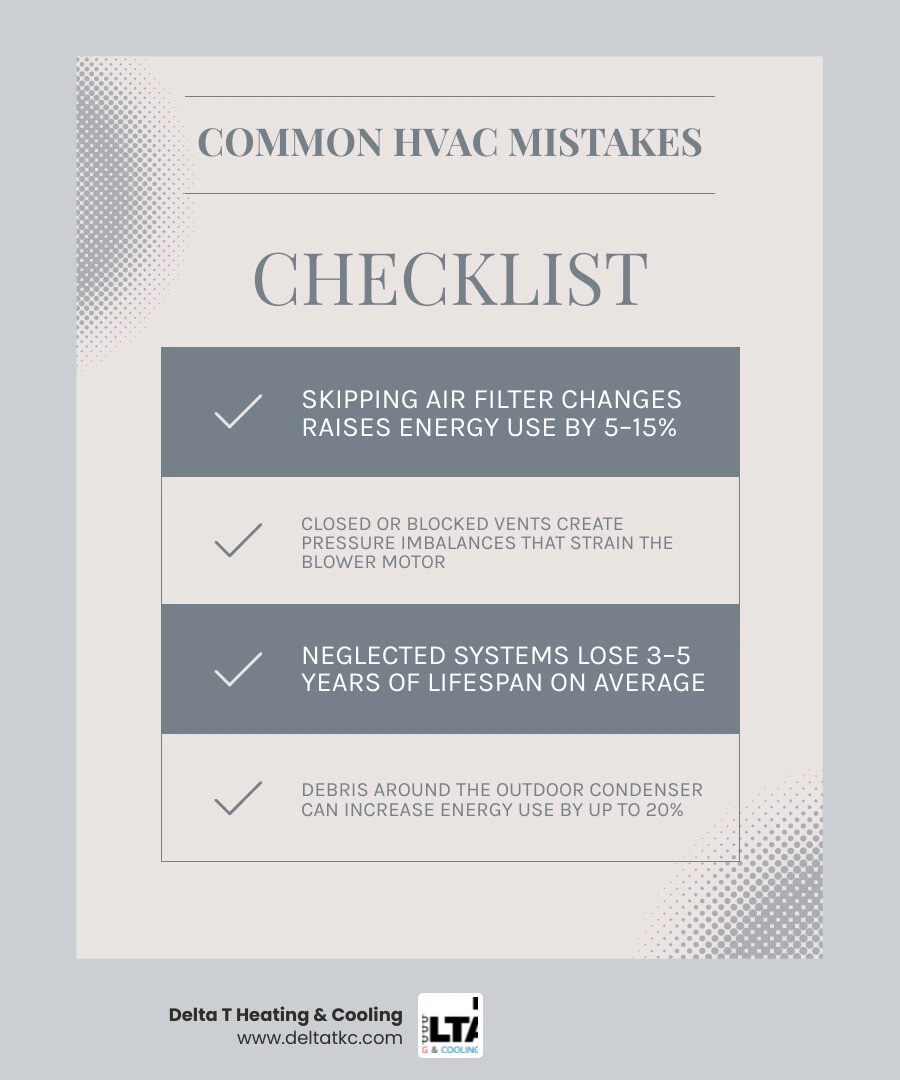
The Cost of Neglect: Major HVAC Maintenance Mistakes Homeowners Make
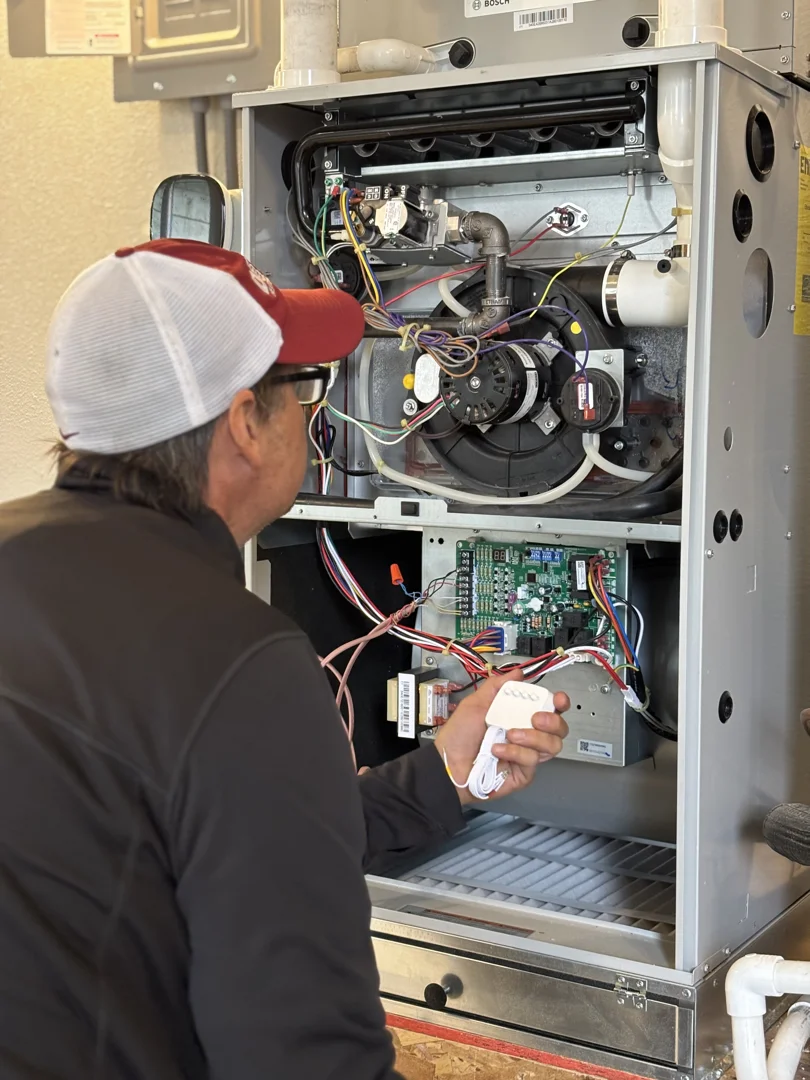
When it comes to home systems, your heating and cooling setup is easily one of the most expensive and hardest-working investments you own. Yet, because much of the system is hidden away in basements, closets, or outside the home, it often falls victim to an "out of sight, out of mind" mentality.
Neglecting regular upkeep is a recipe for system strain, inflated utility bills, and early system failure. In fact, a neglected system can easily have its total operational lifespan cut short by 3 to 5 years. When you consider that up to half of your home's energy consumption goes directly toward heating and cooling, even small drops in efficiency will quickly add up to major financial losses.
Understanding the importance of maintaining your HVAC unit is the first step toward reclaiming control over your utility bills and indoor comfort. Below is a quick comparison of what your system looks like when it receives regular attention versus when it is left to fend for itself:
| Feature | Well-Maintained HVAC System | Neglected HVAC System |
|---|---|---|
| Average Lifespan | 15+ years | 8 to 10 years |
| Energy Consumption | Baseline (highly efficient) | 5% to 20% higher energy usage |
| Airflow Quality | Clean, balanced, and consistent | Restricted, dusty, and uneven |
| Breakdown Frequency | Rare; minor issues caught early | Frequent; high risk of peak-season failure |
| Warranty Status | Valid (meets manufacturer requirements) | Voided due to lack of professional service |
By avoiding the most common hvac maintenance mistakes homeowners make, you can keep your home comfortable year-round, whether you are dealing with a humid summer in Overland Park or a freezing winter night in Olathe.
Forgetting Air Filters: The Most Common HVAC Maintenance Mistakes Homeowners Make
If there is a single mistake that reigns supreme in HVAC failures, it is forgetting to change the air filter. Many homeowners believe that the primary job of an air filter is to purify the air they breathe. While filters do help capture dust, pollen, and pet dander, their primary engineered purpose is actually to protect the internal components of your furnace and air conditioner from dust and debris buildup.
When a filter becomes clogged, it behaves like a physical barrier to airflow. This restriction forces your system's blower motor to work twice as hard to pull air through the home. This lack of airflow can cause your evaporator coils to drop below freezing temperatures, leading to frozen coils, restricted cooling, and eventually a complete system shutdown.
To prevent these issues, it is essential to understand how often should you change your HVAC air filter. While a basic one-inch pleated filter should generally be replaced every 90 days, homes with pets, allergies, or high dust levels may require a fresh filter every 30 to 60 days.
Failing to stay on top of this simple chore has local consequences, too. You can easily learn how a dirty filter causes your AC to run constantly in the Midwest during our humid summer months, driving up your energy bills by up to 15%.
Another common error is buying the most expensive, medical-grade filter (high MERV rating) without checking your system's specifications. High-MERV filters are incredibly dense. If your HVAC system was not designed to handle that level of air restriction, installing one can restrict your airflow just as severely as a dirty filter, straining your blower motor and causing the system to short-cycle. Always balance filtration needs with the physical airflow limits of your equipment.
Skipping Professional Tune-Ups: Why Waiting for a Breakdown is a Mistake
Many homeowners only think to call an HVAC company when their heat stops working on a freezing January night or when the AC blows warm air in July. Waiting for a complete breakdown is one of the most expensive operational mistakes you can make. Emergency service calls during peak seasons can be incredibly stressful, and they are completely preventable.
Scheduling seasonal professional tune-ups — typically in the spring for your air conditioner and the fall for your furnace — is the equivalent of getting a routine oil change for your car. During these visits, a professional technician can clean dirty coils, test electrical connections, measure refrigerant levels, and inspect the heat exchanger for dangerous cracks.
For a complete breakdown of what goes into these visits, check out our annual HVAC maintenance complete guide.
Skipping these routine inspections can also void your manufacturer's warranty. Most major HVAC brands require documented proof of annual professional maintenance to honor parts warranties. If a major component like your compressor or heat exchanger fails, and you cannot prove the system was regularly serviced, you could be left holding the bill for a replacement.
Getting ahead of the seasonal rush is a smart move. Homeowners who plan ahead often look for scheduling AC repairs early in Lenexa and other local suburbs to ensure their systems are primed and ready before the extreme weather hits. Whether you are seeking reliable furnace maintenance in Kansas City or routine cooling checkups, preventive care is always more affordable than emergency repairs.
Operational and Airflow Blunders That Strain Your System
Even if you change your filters regularly and schedule annual tune-ups, everyday operating habits can quietly sabotage your HVAC system. Your system is designed to operate under a very specific level of internal air pressure, known as static pressure. When this balance is disrupted by improper airflow management, it places immense strain on your system's blower motor and compressor.
By implementing basic HVAC maintenance tips for homeowners, you can easily avoid these common operational blunders and keep your utility bills from spiking during seasonal transitions.
Blocking Vents and Registers: Airflow HVAC Maintenance Mistakes Homeowners Make
One of the most persistent myths in home energy savings is that closing vents in unused rooms will reduce energy consumption. It seems logical: if you aren't using a room, why waste money heating or cooling it?
However, modern central HVAC systems are engineered to distribute air evenly across a specific volume of space. When you close supply registers, you do not stop the system from producing that air; instead, you simply build up immense static pressure inside your ductwork. This pressure imbalance forces air back toward the system, which can cause:
- Frozen evaporator coils in the summer
- An overheated furnace heat exchanger in the winter
- Increased duct leakage, wasting up to 30% of your conditioned air into crawlspaces or attics
- Premature failure of the blower motor
To keep your system running smoothly, make sure all supply and return registers remain open and completely unblocked. Avoid placing large furniture, such as sofas, beds, or heavy drapes, directly over or in front of your vents. Keeping a clear zone of at least 6 to 12 inches around all registers ensures that air can circulate freely, preventing pressure buildups and maintaining a balanced, comfortable climate throughout your home.
Neglecting the Outdoor Condenser Unit and Thermostat Placement
Your outdoor condenser unit is responsible for releasing the heat pulled from inside your home. To do this effectively, it needs a continuous, unrestricted supply of outdoor air. Unfortunately, many homeowners treat the outdoor unit as an eyesore and attempt to hide it behind dense landscaping, privacy fences, or decorative structures.
Allowing weeds, shrubs, or lawn debris to crowd the condenser acts as an insulating blanket, trapping heat inside the unit. This obstruction can increase your system's energy consumption by up to 20% and cause the compressor to overheat and fail. As a rule of thumb, maintain a minimum of two feet of clear space around all sides of your outdoor unit, and regularly trim back any overhanging branches or creeping vines.
Indoor thermostat placement also plays a massive role in system operation. Your thermostat is the brain of your HVAC system; if it receives inaccurate temperature readings, the entire home suffers. Placing a thermostat in direct sunlight, near drafty windows, or close to heat-generating appliances (like ovens, lamps, or televisions) will cause it to read the room as much hotter than it actually is.
This leads to "short cycling," where your air conditioner constantly turns on and off in rapid succession. Short cycling not only ruins your indoor comfort but also places immense wear and tear on your system's electrical components, leading to premature breakdowns.
Technical and DIY Hazards: When to Call a Professional
With the rise of online video tutorials, it is tempting to try and tackle HVAC repairs yourself. While there are plenty of safe, DIY-friendly tasks — like changing filters, clearing light debris around your outdoor unit, or cleaning vent grates — complex mechanical and electrical repairs should always be left to licensed professionals.
Attempting to repair your own system without proper training carries serious physical risks and can lead to costly mistakes. If you are experiencing issues with your system, it is always safest to call for professional AC Service and Repair in Kansas City to diagnose and resolve the problem correctly.
The Dangers of DIY Repairs and Improper System Sizing
HVAC systems are incredibly complex machines that combine high-voltage electricity, highly pressurized refrigerants, and sensitive electronic control boards. Attempting to swap out electrical components like capacitors or contactors without proper training can result in severe electrical shocks or system-ruining short circuits.
Furthermore, handling chemical refrigerants without an EPA Section 608 certification is a federal violation. If you suspect a refrigerant leak, simply buying DIY recharge kits online is both illegal and ineffective; refrigerant does not get "used up" like gas in a car, so a low level always indicates a physical leak that must be professionally located and repaired.
Another major technical error occurs during system replacement. Some homeowners try to bypass professional load calculations to save money, opting to purchase a system online and hire an unlicensed handyperson to install it. This often leads to installing an improperly sized system.
An oversized system will cool your home too quickly without running long enough to remove moisture from the air, leaving you with a cold, clammy house. An undersized system will run constantly without ever reaching your thermostat's setpoint, leading to massive energy bills and early system burnout. To avoid these issues, always consult a professional who will perform a proper Manual J load calculation to determine the exact heating and cooling needs of your home.
Ignoring Warning Signs: Noises, Odors, and Moisture
Your HVAC system will almost always warn you before a major failure occurs. Ignoring these early warning signs is a costly mistake that can turn a simple, affordable repair into a complete system replacement.
Keep an ear and nose out for these common red flags:
- Loud Grinding or Squealing Noises: A loud grinding sound typically points to a failing motor bearing. If you continue running the system, the motor can seize entirely, causing widespread electrical damage.
- Musty or Burning Odors: Musty smells coming from your vents usually point to mold growth inside your ductwork or a clogged condensate drain line. A persistent burning smell could indicate overheating electrical components or a damaged blower motor.
- Pooling Water or Excessive Moisture: Your air conditioner naturally condenses moisture out of the air. This water is collected in a drain pan and funneled away via a condensate drain line. If this line becomes clogged with algae or dust, water will back up, leading to pooling water around your indoor unit, drywall damage, and ruined ceilings.
If you notice any of these warning signs, it is critical to turn off your system immediately and contact a professional. Addressing issues early is the key to protecting your home. Understanding why prompt AC repair matters is the best way to safeguard your indoor comfort and protect your wallet.
Frequently Asked Questions About HVAC Care
Taking proper care of your heating and cooling system does not have to be complicated. To help you avoid the most common hvac maintenance mistakes homeowners make, we have gathered answers to some of the most frequently asked questions we receive from local homeowners.
How often should I change my air filter if I have pets?
If you have furry family members, your air filters are going to clog much faster than they would in a pet-free home. Pet dander, hair, and outdoor debris brought in by dogs and cats quickly accumulate on the filter media, restricting airflow and forcing your system to work harder.
- Single Pet Households: We recommend checking your filter every 30 days and replacing it at least every 60 days.
- Multiple Pets or Long-Haired Breeds: You should move to a 20-to-45-day replacement cycle, especially during peak heating and cooling seasons.
Regularly changing your filters is the easiest way to preserve your indoor air quality and protect your system's blower motor.
What is the most common HVAC part to fail?
Without a doubt, the most common HVAC part to fail is the capacitor.
The capacitor is a small, cylinder-shaped component that acts like a temporary battery for your system's motors. It delivers the high-voltage electrical surge required to start up the compressor and blower motor. Because capacitors work incredibly hard and are highly sensitive to summer heat, electrical surges, and general wear and tear, they often degrade over time.
When a capacitor begins to fail, you might hear a clicking or humming sound coming from your outdoor unit, or your system may struggle to start. Fortunately, replacing a capacitor is a quick and affordable repair when handled by a professional, but ignoring the warning signs can quickly burn out your expensive compressor motor.
What are the benefits of an HVAC maintenance plan?
Many homeowners wonder if investing in an annual service agreement is truly worth it. The short answer is yes! A comprehensive maintenance plan is the best way to automate your home comfort and protect your system from unexpected breakdowns.
By enrolling in a structured plan, you can enjoy several key benefits:
- Two Precision Tune-Ups a Year: Ensures your air conditioner is ready for summer and your furnace is prepared for winter.
- Lower Utility Bills: Keeps your system running at peak energy efficiency, reducing monthly operational costs.
- Priority Scheduling: Places you at the front of the line if you ever experience an issue during peak weather seasons.
- Warranty Compliance: Provides the documented professional service required by manufacturers to keep your parts warranty valid.
Conclusion: Keep Your Comfort on Track with Delta T Heating & Cooling
Avoiding the most common hvac maintenance mistakes homeowners make does not require a degree in mechanical engineering. By staying on top of simple tasks like changing your air filters, keeping your vents unblocked, and clearing debris away from your outdoor unit, you can prevent the vast majority of peak-season breakdowns.
However, the most effective way to protect your heating and cooling system is to partner with a trusted local professional. At Delta T Heating & Cooling, we are proud to provide prompt, honest, and professional HVAC repair, installation, and maintenance services across Johnson County and the surrounding metro areas. From Olathe, Overland Park, and Shawnee to Lenexa, Leawood, and beyond, our experienced team is dedicated to offering detailed explanations and affordable maintenance solutions tailored to your home's unique needs.
Ready to stop worrying about your heating and cooling system? Contact us today to schedule your next seasonal tune-up. Let us help you keep your home comfortable, efficient, and completely stress-free all year long!
Talk to us
Need Help?
Engineer-led diagnosis. Upfront pricing. Free second opinions on outside quotes.
More Articles
View All PostsReady to Get Started?
Whether you need a repair, maintenance, or a new installation, our expert team is here to help.